

Remote Land Investment Strategy: Small-Scale, High Returns
- By dream-domes.com
Using Urban Logic on Remote Land Is Often Where Problems Begin
After spending enough time in land investment, the word remote tends to be oversimplified.
In many discussions, it is almost automatically associated with low liquidity, slow returns, or dismissed altogether before deeper evaluation even begins.
Yet when looking back at projects that truly underperformed, location alone is rarely the decisive factor. More often, the issue is that the land is remote, but the development logic applied to it is distinctly urban.
Leisure, retreat, and nature-based experiences do not belong to the city system. People have always been willing to pay for silence, immersion in nature, and temporary disconnection from daily routines. What has changed is not the existence of demand, but its form. It no longer expresses itself through long-term residence or large-scale commercial developments.
The challenge with remote land is not whether demand exists, but whether it is properly understood.
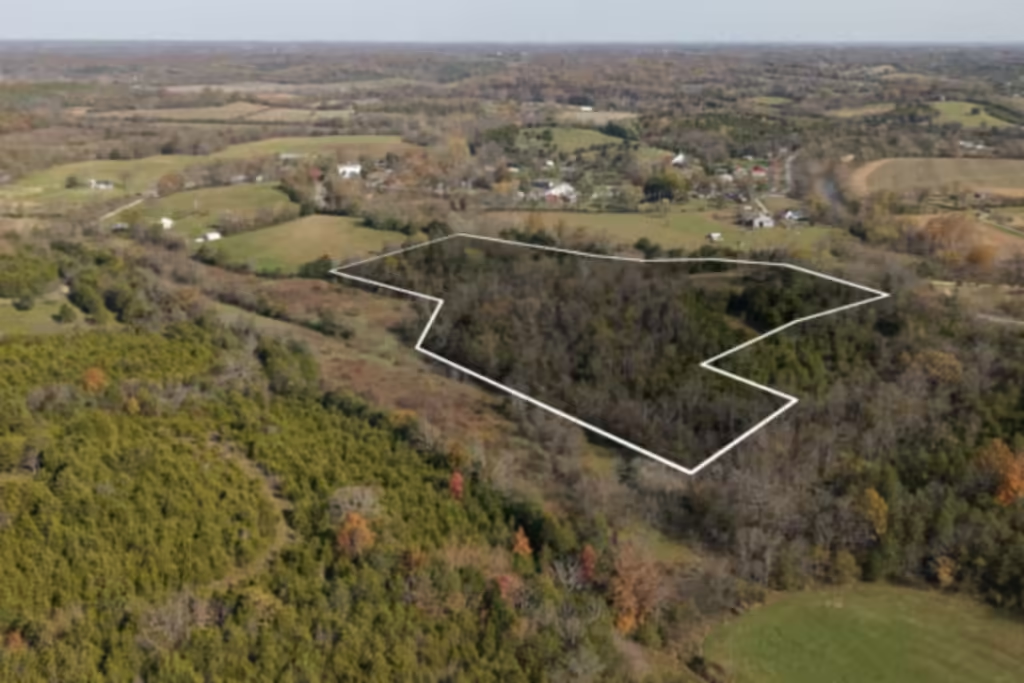
Large-Scale Development Often Amplifies Risk in Remote Areas
Pushing large, capital-intensive projects in remote locations almost inevitably magnifies uncertainty.
Infrastructure costs are frequently underestimated, construction timelines overestimated, and return horizons pushed further and further out.
As scale increases, so does the project’s dependence on stable cash flow. Remote areas, however, rarely offer the buffering capacity required to support such financial weight. In many cases, the market does exist — it simply has not matured at the pace implied by the project’s scale.
The issue is rarely that something was done incorrectly, but rather that too much was done, too early.
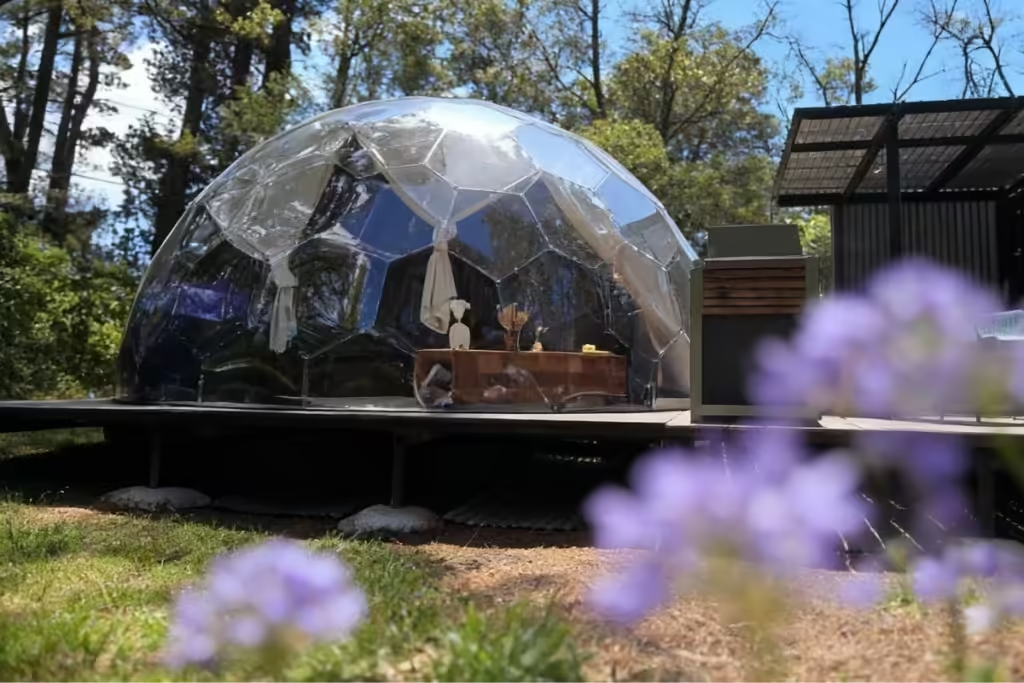
Small-Scale, Light Development Aligns Better with the Rhythm of Remote Land
By contrast, small-scale development tends to be more rational in remote contexts.
Here, small does not mean conservative or compromised — it reflects respect for uncertainty.
When a project serves a clearly defined audience, operates within a manageable scale, and enters real operations early, the land’s value becomes easier to validate. Feedback arrives sooner, adjustments are more feasible, and decisions rely less on assumptions and more on lived performance.
In long-term observation, projects with stable returns are often not the ones that do the most, but the ones that do the right amount.
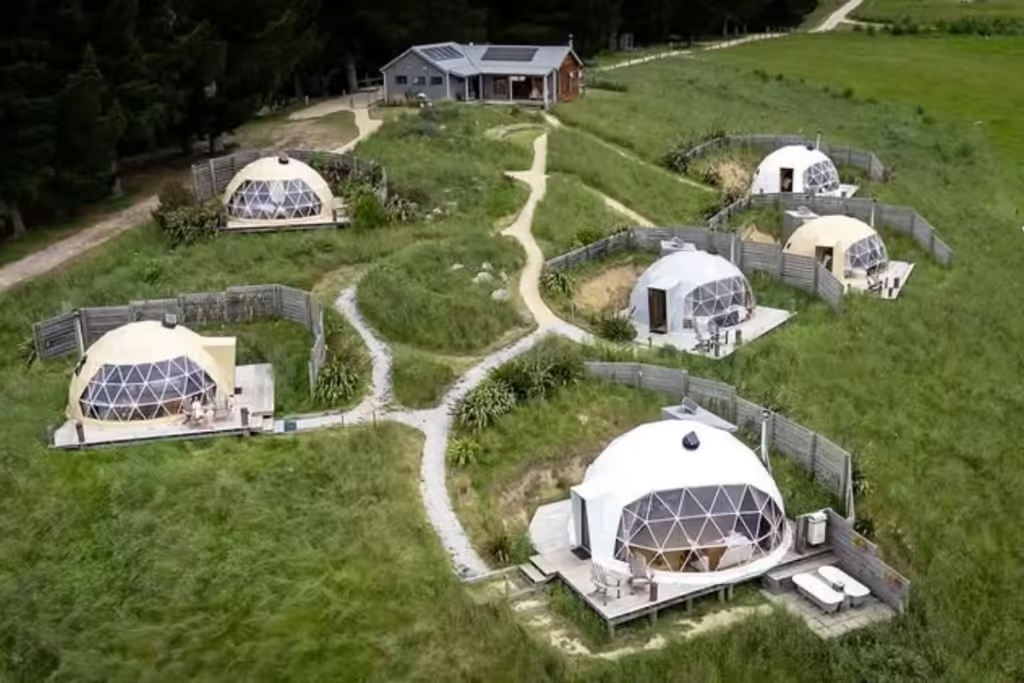
Distance, in this process, gradually shifts from disadvantage to advantage.
Being removed from urban systems reduces interference and increases experiential purity. Silence, privacy, and immersion in nature are not elements that can be fully manufactured; they are attributes granted by location itself.
When remoteness becomes part of the experience rather than a logistical drawback, distance stops being a cost and begins to form the basis of premium value.
From an investment perspective, remoteness has never been the decisive variable.
What truly matters is whether one is willing to step away from urban assumptions and reassess the relationship between land and demand.
When strategy aligns with location, even small projects can produce stable, healthy returns. More often than not, outcomes are shaped not by where the land is, but by how it is understood.
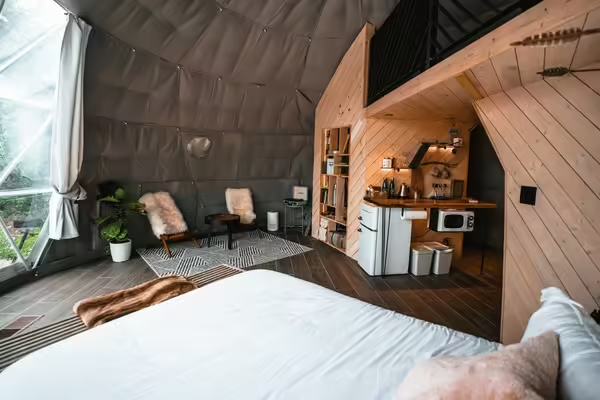
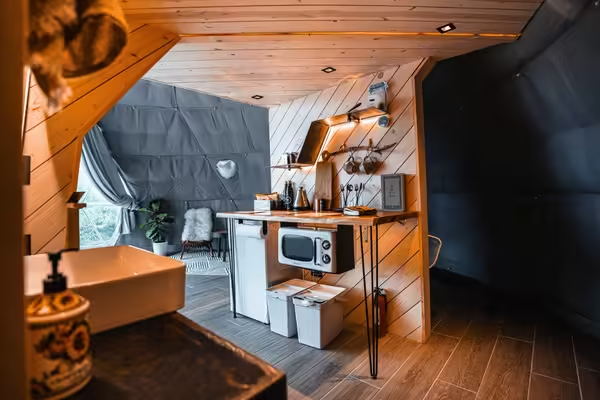
For those currently evaluating specific parcels or actively advancing projects, it can be valuable to reference existing remote developments — from forest-based retreats to small-scale, experience-driven glamping projects — as they offer a more realistic sense of pace, scale, and operational rhythm than theoretical models alone.
Share the Post:
Related Posts
Before Heavy Development: How Land Investment Can Hedge Risk
5 January 2026