
Remote Land Investment Strategy: Small-Scale, High Returns

Remote Land Investment Strategy: Small-Scale, High Returns
- By dream-domes.com
Using Urban Logic on Remote Land Is Often Where Problems Begin
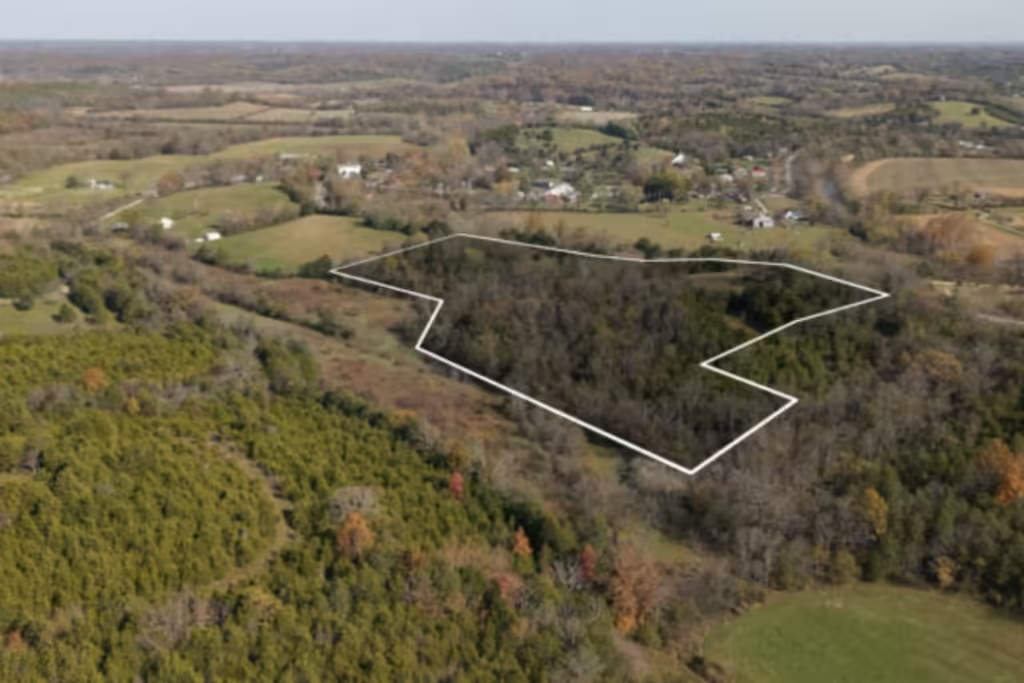
After spending enough time in land investment, the word remote tends to be oversimplified.
In many discussions, it is almost automatically associated with low liquidity, slow returns, or dismissed altogether before deeper evaluation even begins.
Yet when looking back at projects that truly underperformed, location alone is rarely the decisive factor. More often, the issue is that the land is remote, but the development logic applied to it is distinctly urban.
Leisure, retreat, and nature-based experiences do not belong to the city system. People have always been willing to pay for silence, immersion in nature, and temporary disconnection from daily routines. What has changed is not the existence of demand, but its form. It no longer expresses itself through long-term residence or large-scale commercial developments.
The challenge with remote land is not whether demand exists, but whether it is properly understood.
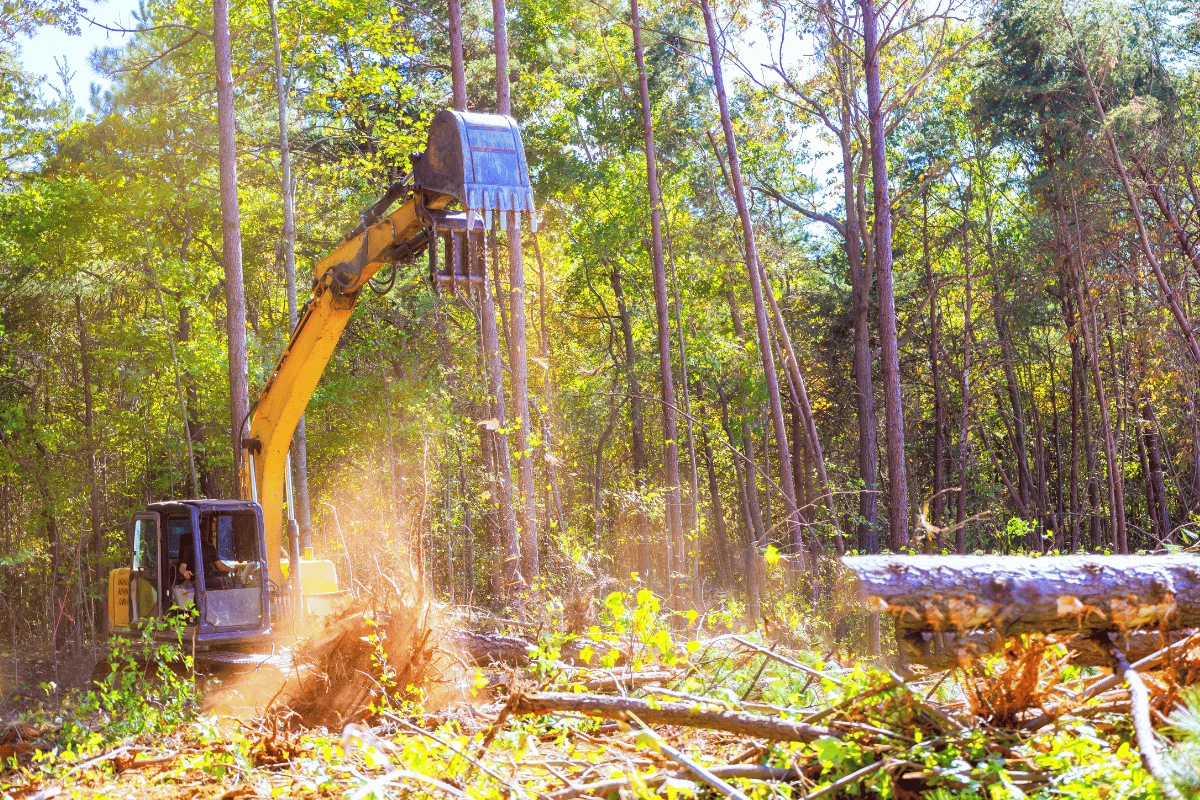
Large-Scale Development Often Amplifies Risk in Remote Areas
Pushing large, capital-intensive projects in remote locations almost inevitably magnifies uncertainty.
Infrastructure costs are frequently underestimated, construction timelines overestimated, and return horizons pushed further and further out.
As scale increases, so does the project’s dependence on stable cash flow. Remote areas, however, rarely offer the buffering capacity required to support such financial weight. In many cases, the market does exist — it simply has not matured at the pace implied by the project’s scale.
The issue is rarely that something was done incorrectly, but rather that too much was done, too early.
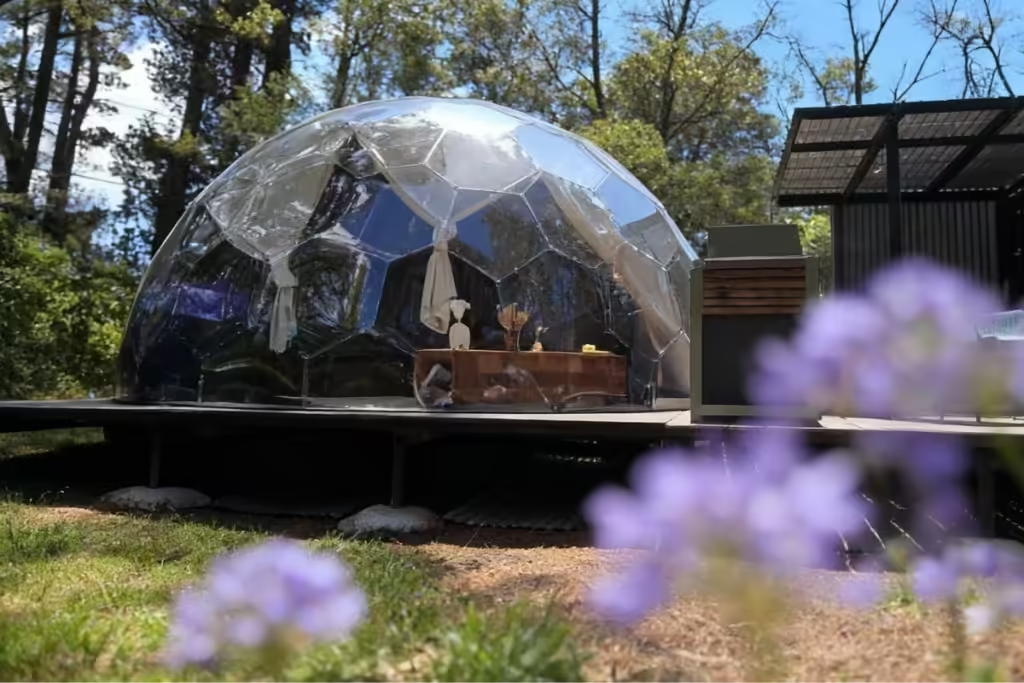
Small-Scale, Light Development Aligns Better with the Rhythm of Remote Land
By contrast, small-scale development tends to be more rational in remote contexts.
Here, small does not mean conservative or compromised — it reflects respect for uncertainty.
When a project serves a clearly defined audience, operates within a manageable scale, and enters real operations early, the land’s value becomes easier to validate. Feedback arrives sooner, adjustments are more feasible, and decisions rely less on assumptions and more on lived performance.
In long-term observation, projects with stable returns are often not the ones that do the most, but the ones that do the right amount.
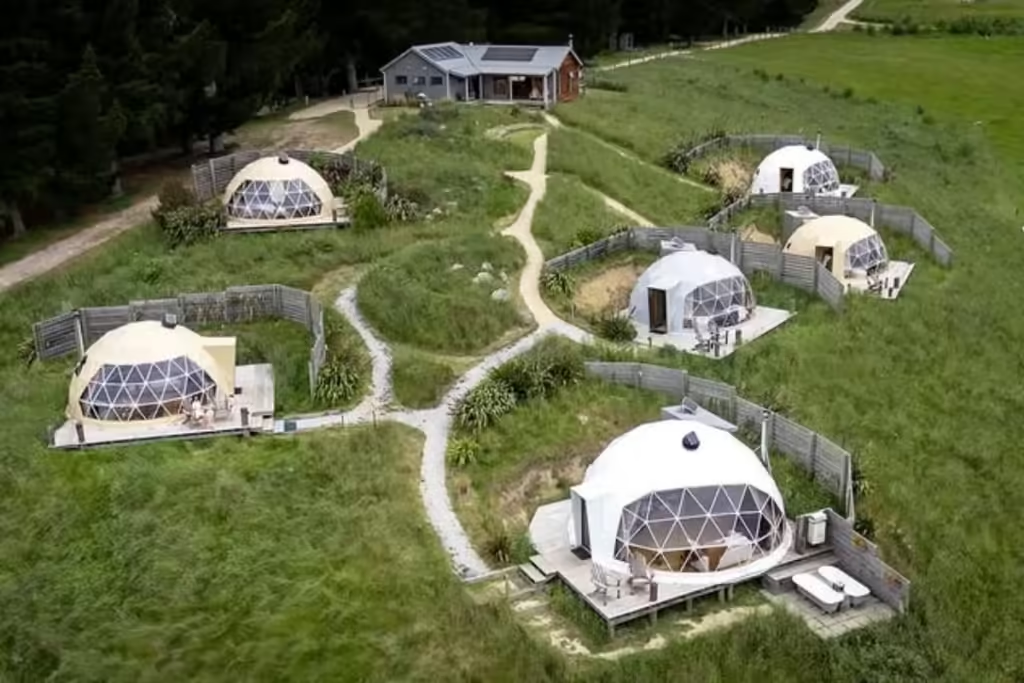
Distance, in this process, gradually shifts from disadvantage to advantage.
Being removed from urban systems reduces interference and increases experiential purity. Silence, privacy, and immersion in nature are not elements that can be fully manufactured; they are attributes granted by location itself.
When remoteness becomes part of the experience rather than a logistical drawback, distance stops being a cost and begins to form the basis of premium value.
From an investment perspective, remoteness has never been the decisive variable.
What truly matters is whether one is willing to step away from urban assumptions and reassess the relationship between land and demand.
When strategy aligns with location, even small projects can produce stable, healthy returns. More often than not, outcomes are shaped not by where the land is, but by how it is understood.
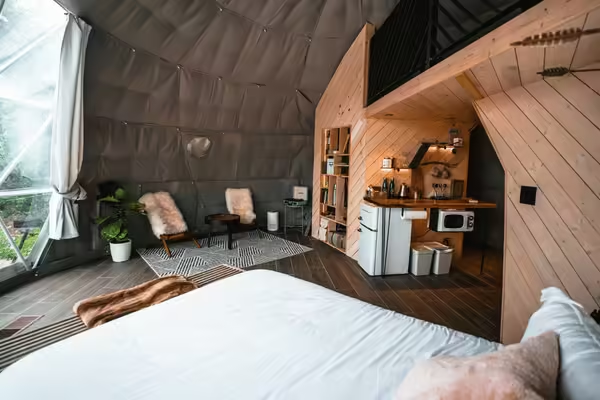
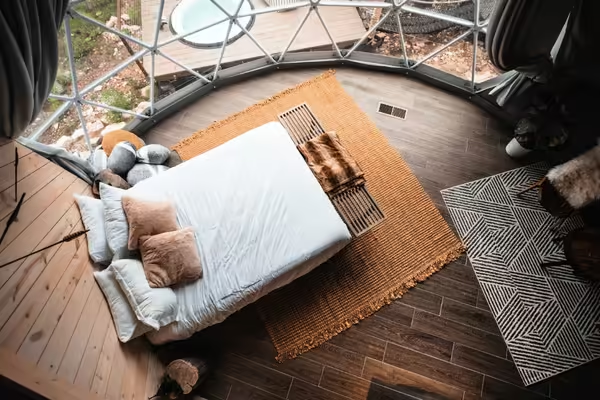
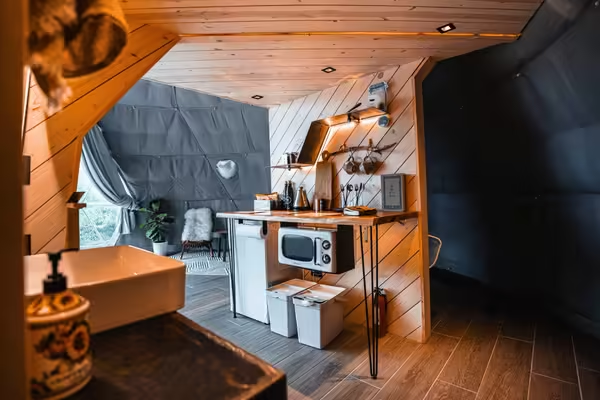
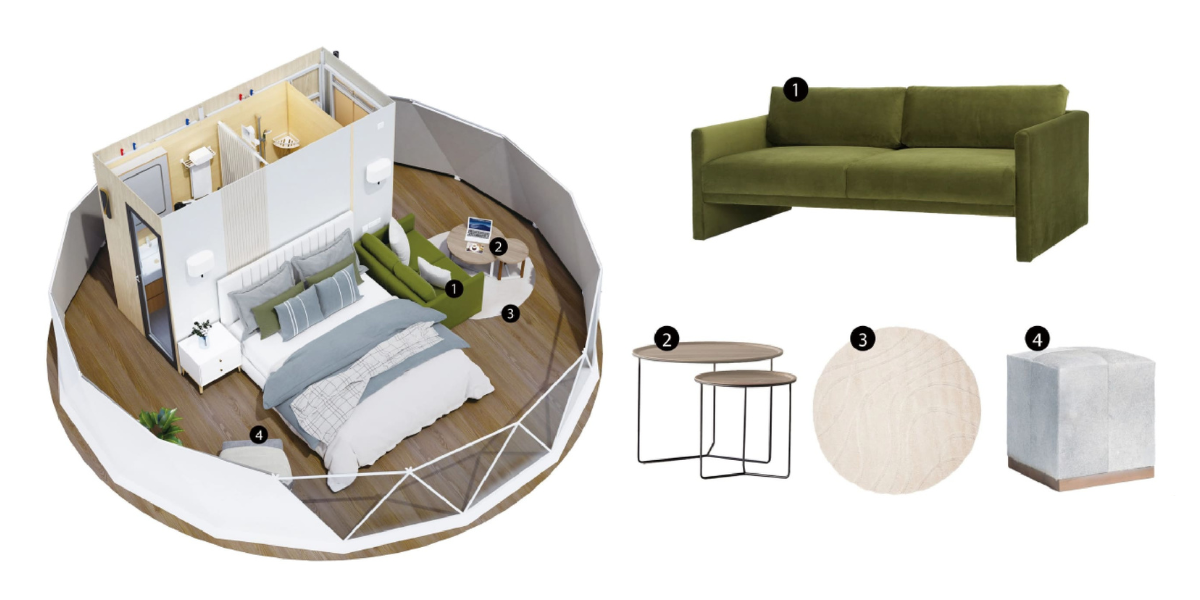
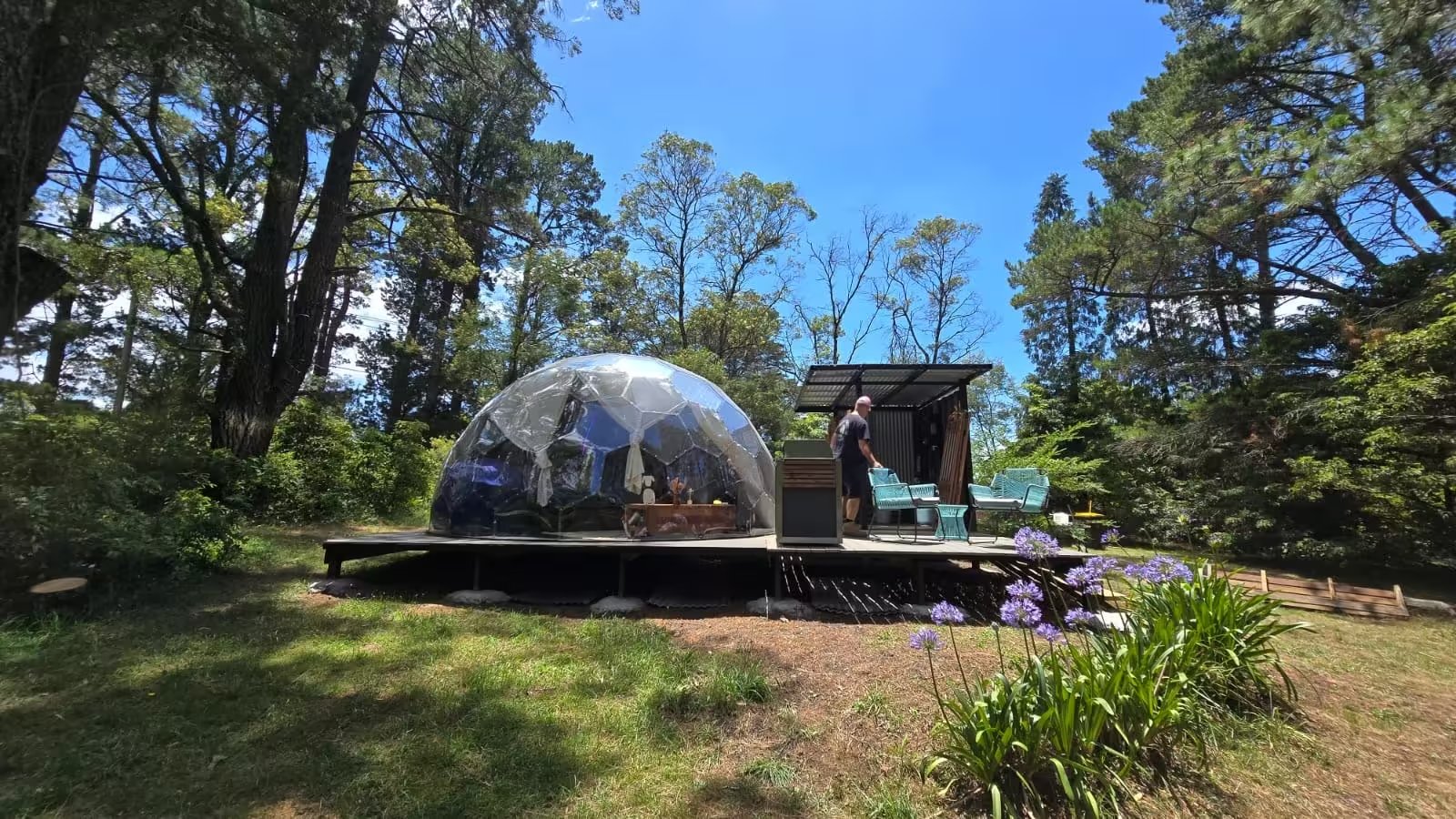
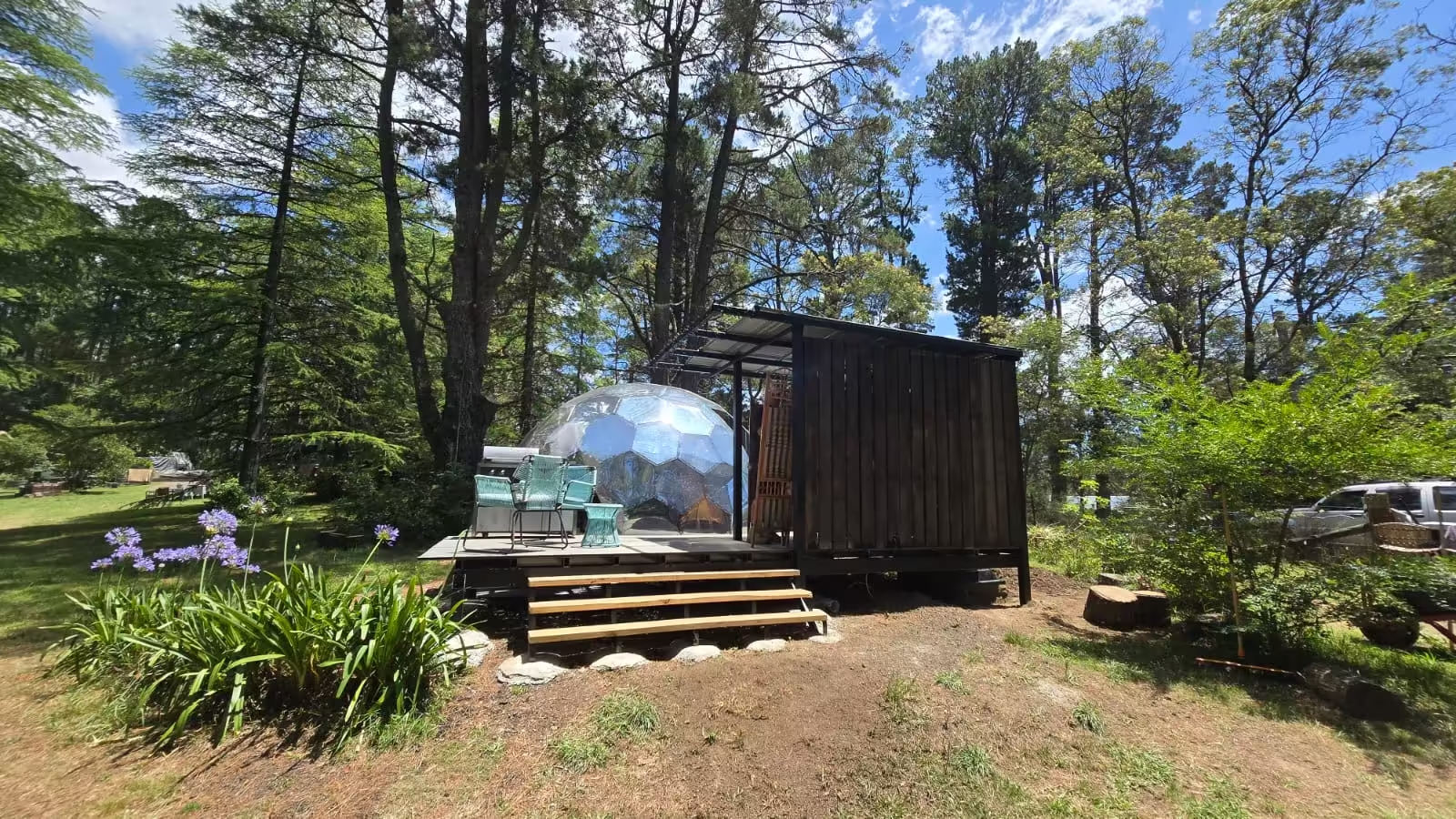
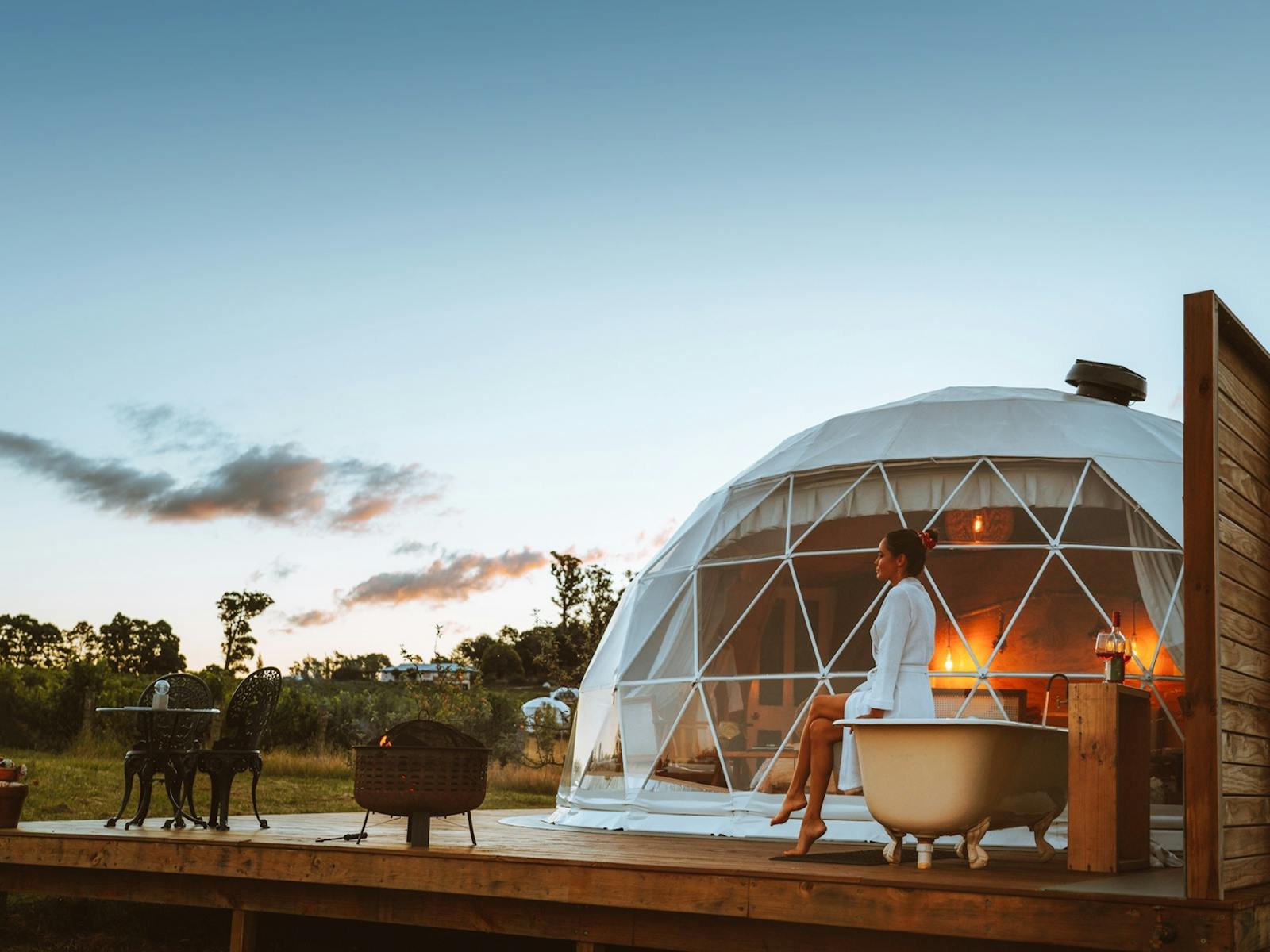
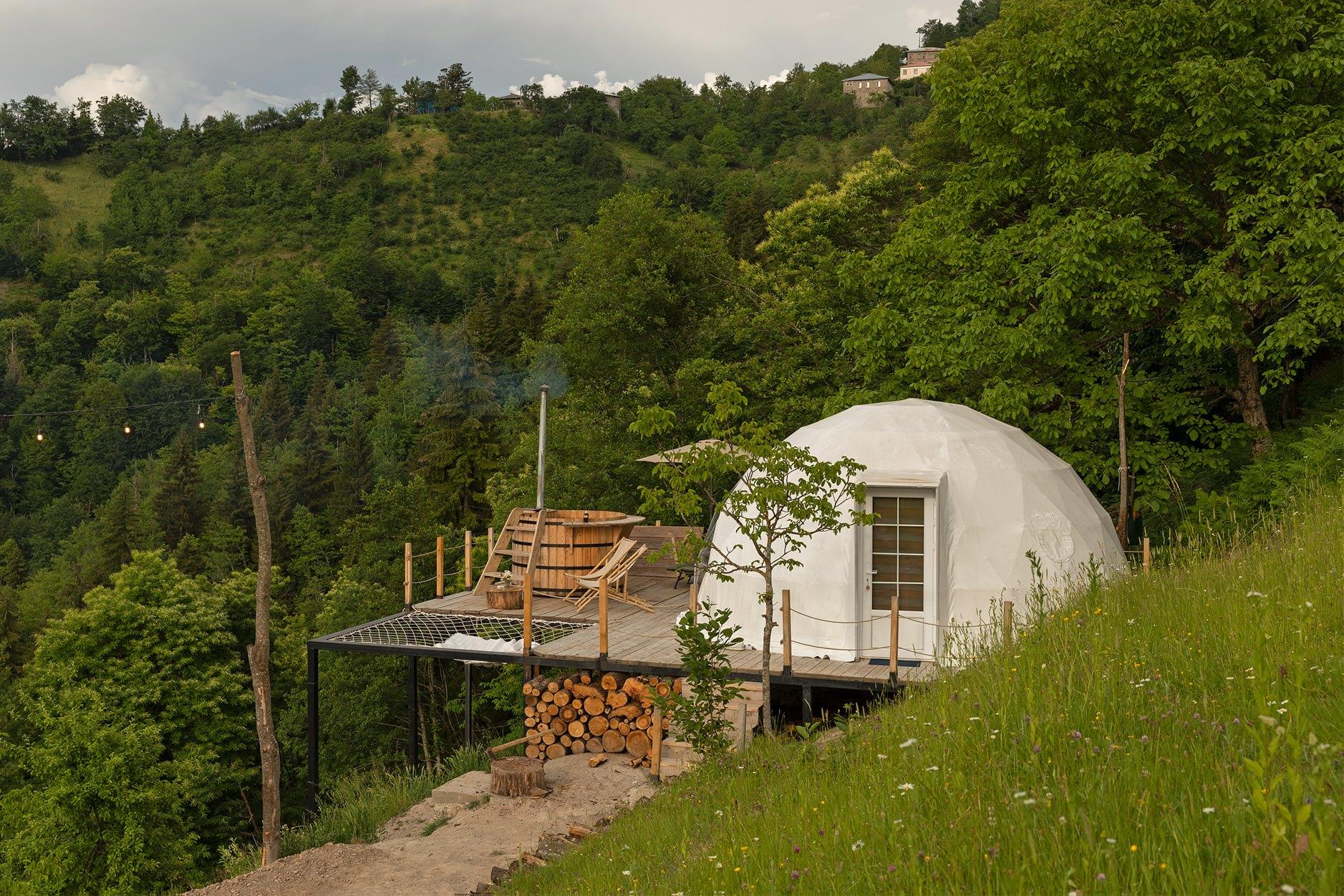
For those currently evaluating specific parcels or actively advancing projects, it can be valuable to reference existing remote developments — from forest-based retreats to small-scale, experience-driven glamping projects — as they offer a more realistic sense of pace, scale, and operational rhythm than theoretical models alone.
Share the Post:
Related Posts
Remote Land Investment Strategy: Small-Scale, High Returns
23 January 2026
Before Heavy Development: How Land Investment Can Hedge Risk
5 January 2026
Before Heavy Development: How Land Investment Can Hedge Risk

Before Heavy Development: How Land Investment Can Hedge Risk
- By dream-domes.com
“
Snapshot:
For land investors evaluating capital commitment timing
The biggest risk in land investment is not return volatility, but irreversible decisions made too early.
Traditional heavy development concentrates uncertainty at the point of highest capital exposure.
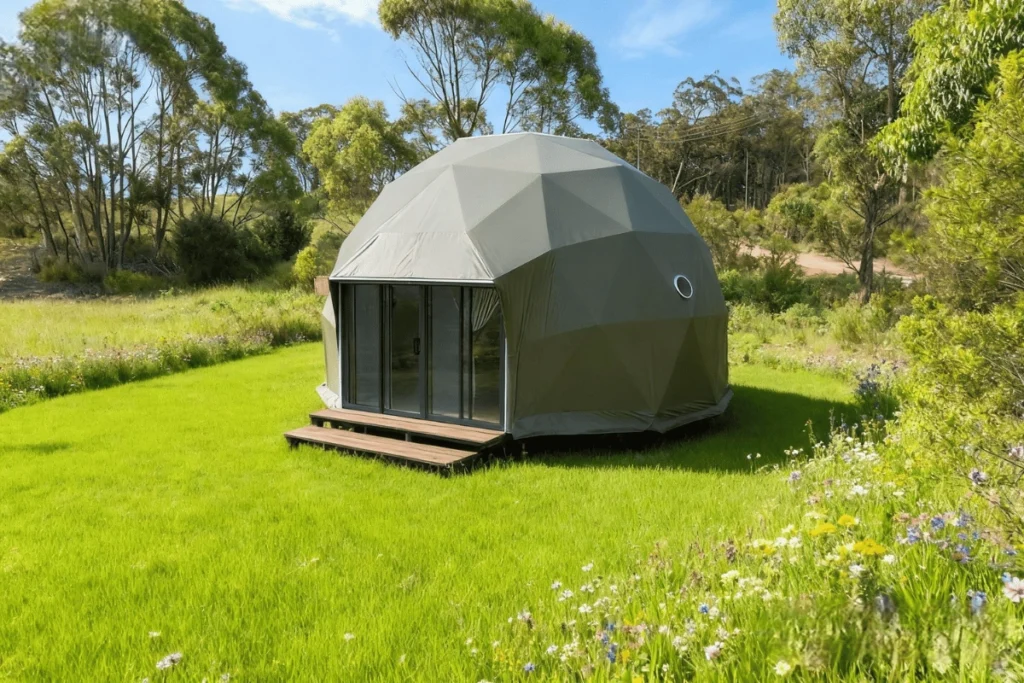
Lightweight, reversible hospitality models such as glamping can act as a risk-hedging layer, not a final build.
Early-stage cash flow functions as market validation, not profit optimization.
The objective is to delay irreversibility while improving decision quality.
In today’s land investment environment, one question matters more than most others: When is the right moment to commit serious capital to development?
If you own—or are considering acquiring—5 to 50 acres of non-urban land, you already understand that land investment is not just about upside.
It is about timing, risk mitigation, and decision quality.
The challenge is not whether land can generate returns. The challenge is how to reduce irreversible risk before committing to capital-intensive assets.
This article explores how modern land investors are rethinking development order—and why lightweight, reversible hospitality models such as glamping are increasingly used as a risk-hedging layer rather than a final destination.
The Real Risk in Land Investment Is Not Uncertain Returns It’s Committing Too Early
Most underperforming land investments do not fail because demand disappears.
They fail because decisions were locked in before the market was truly understood.
Traditional land development follows a familiar sequence:
1
Planning
2
Design
3
Permitting
4
Heavy Infrastructure
5
Long Holding Period
6
Cash Flow
The issue with this model is not that it cannot work. It is that it concentrates risk at the very beginning.
You are forced to:
- Commit large amounts of capital upfront
- Lock in a development concept based on projections.
- Accept high sunk costs before receiving real market feedback.
Once capital-intensive infrastructure is in place, flexibility disappears.
At that point, even a flawed strategy must be “worked through” rather than corrected.
From a land investment perspective, this is not risk management—it is risk front-loading.
What “Risk Hedging” Really Means in Modern Land Investment
In financial markets, risk hedging often refers to interest rates, currency exposure, or insurance instruments.
In land investment, the most critical risk is different.
It is decision risk.
Specifically:
Making irreversible development decisions before demand, pricing, and use patterns are validated. Risk hedging in this context does not mean avoiding risk entirely.
It means reducing the cost of being wrong.
The goal is simple:
-
Delay irreversible commitments
-
Gather real operational data
-
Preserve optionality as long as possible
This mindset has become increasingly important as land investment timelines stretch and uncertainty rises.
Why Early Cash Flow Is a Hedging Tool—Not a Profit Shortcut You may be thinking:
You may be thinking:“Generating income before development sounds practical—but isn’t that just running a small business on the land?”
The distinction lies in intent.
Early-stage cash flow, when used correctly, is not about maximizing profit.
It is about market validation. Think of it as a Minimum Viable Product (MVP) for land use:
At what price point?
Are guests willing to pay for this location?
In which seasons?
For which type of experience?
This information is far more valuable than speculative feasibility studies.
In this sense, early cash flow functions as:
A demand test
A pricing calibration tool
A behavioral insight engine
It turns assumptions into evidence—before capital becomes locked in.
Why Reversible, Light-Asset Models Are Effective Risk Mitigation Tools
Across Europe and North America, more land investors are using glamping and luxury camping as a strategic layer in land investment—not as a final outcome.
Why? Because these models align perfectly with modern risk mitigation principles.
They offer: This improves capital efficiency and protects liquidity.
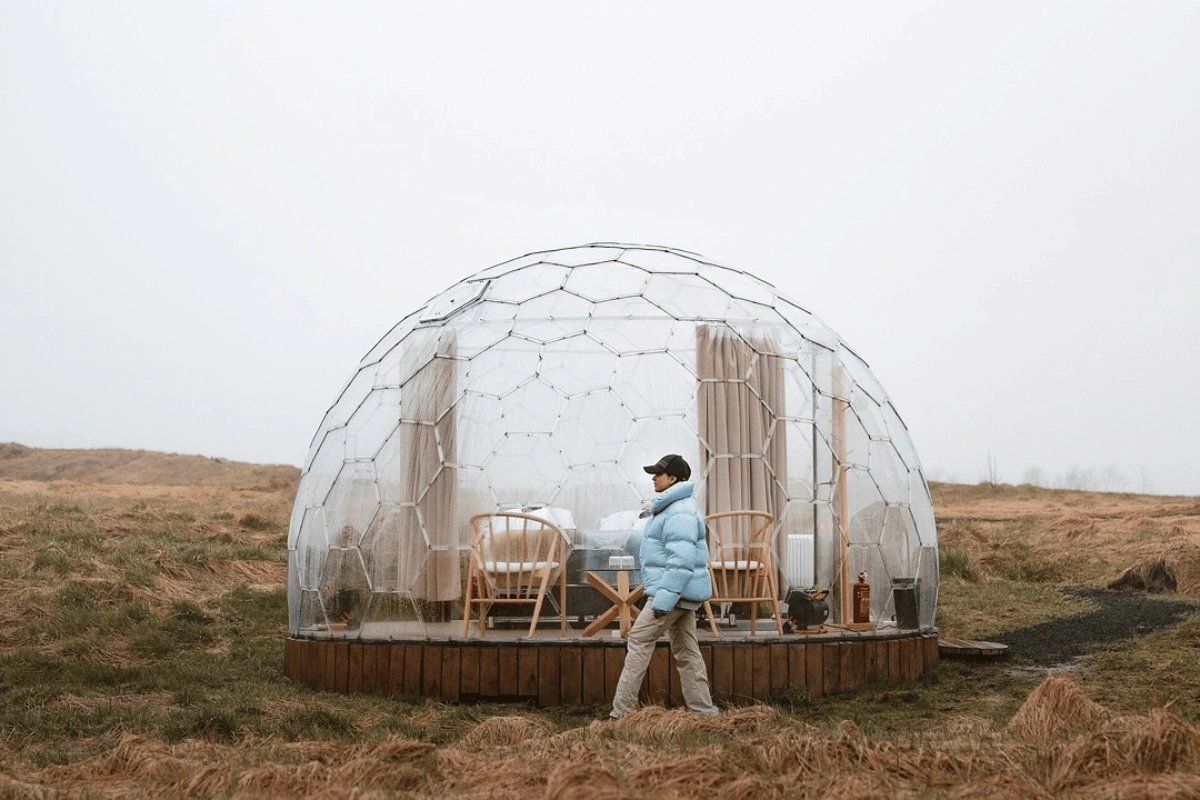
A glamping dome or geodome is not permanent infrastructure.
Reversibility means:
- You can relocate units
- Adjust layouts
- Scale up or down without structural loss
This flexibility is rare in traditional hospitality business development.
Permitting timelines are often shorter. Time-to-market is measured in months, not years.
Speed matters when validating land investment assumptions. You are not guessing how guests behave—you are observing it. Occupancy patterns, length of stay, seasonality, and price sensitivity become visible quickly.
From an investment standpoint, these structures are not the asset—they are the diagnostic instrument.
Glamping as a Risk-Hedging Layer, Not a Final Commitment
A common misconception is that lightweight hospitality equals temporary or low-quality development.
That is not how professional investors view it.
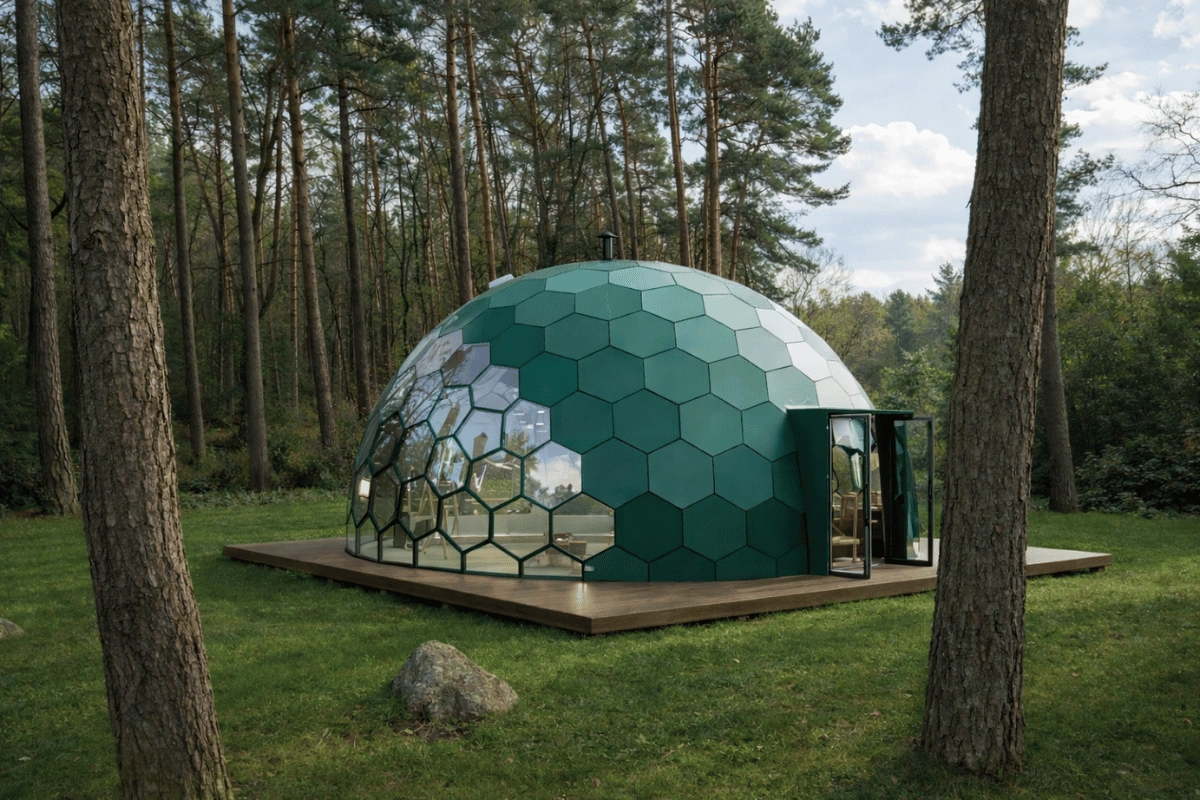
When positioned correctly, glamping and luxury camping serve as a first development layer:
Not “Should I build a resort?”
But “How does this land perform when activated?”
Some parcels demonstrate clear potential for expansion into capital-intensive hospitality assets.
Others reveal that low-density, high-margin experiences outperform large-scale builds.
The advantage lies in choice.
By using reversible structures first, land investment decisions are made with evidence—not hope.
A Practical, Investor-Oriented Implementation Framework
If you are considering this approach, the process does not need to be complex.
step 1
Is it demand uncertainty? Pricing risk? Development direction?
Is it demand uncertainty? Pricing risk? Development direction?
step 1
step 2
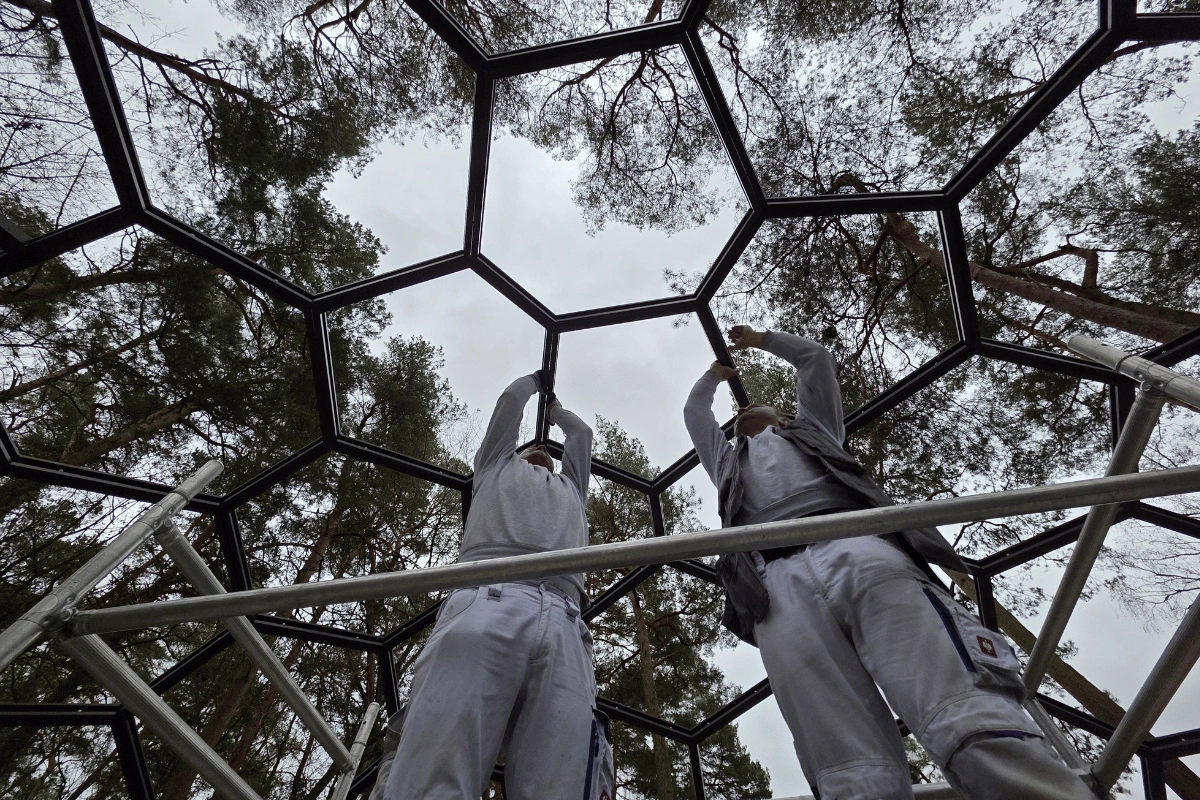
Deploy a Small, Controlled Activation
A limited number of glamping dome or geodesic dome units is sufficient.
The goal is learning—not scale.
step 2
step 3
Observe Before Optimizing
Revenue matters—but patterns matter more.
Who books? When? Why?
step 3
step 4
Decide on Heavy Infrastructure Later
At this point, you are no longer speculating.
You are allocating capital with context.
step 4
This approach supports asset diversification, protects downside exposure, and opens paths to passive income without premature commitment.
The Smartest Hedge in Land Investment Is Delaying Irreversibility
In today’s land investment landscape, capital is not the scarcest resource.
Clarity is.
By using lightweight, reversible hospitality models such as glamping to activate land early, you gain:
-
Market validation
-
Strategic flexibility
-
Stronger decision-making leverage
Whether you ultimately expand, refine, or exit, you do so from a position of strength.
This is not hesitation.It is professional risk management.
And for modern land investors, that discipline often defines the difference between optionality and obligation.
Share the Post:
Related Posts

Eco Dome Tent — Simplify Your Path Through Regulatory Hurdles
21 November 2025

Traditional Luxury Resort Facing Lower ROI?
14 November 2025
Eco Dome Tent — Simplify Your Path Through Regulatory Hurdles

Eco Dome Tent — Simplify Your Path Through Regulatory Hurdles
- By dream-domes.com
Picture this: you’re standing on a piece of land with breathtaking views and unlimited potential. But looming ahead are the endless waits for building permits, layers of environmental restrictions, and that gnawing worry about your substantial investment going down the drain… Traditional development feels like a suit of heavy armor, weighing you down as you try to move forward with innovation.
But don’t let these challenges cloud your vision. A quiet revolution in “light-touch” development is underway, and at its heart is the uniquely shaped eco dome tent. It’s more than just a tent—it’s a master key to navigating complex regulations, unlocking your land’s value while minimizing risk.

We Get Your Frustrations: The "Three Big Hurdles" in Development
1. The Permit Maze: Easy to Get Lost
The mere thought of navigating review after review across multiple departments—structural, fire, sanitation—over several years is enough to drain anyone’s energy.
2. The Environmental "Red Tape": Handle With Care
Protecting the ecosystem is vital, but strict limits on grading and tree clearing can bring conventional development to a standstill.
3. The Investment Pit: Hard to Climb Out Of
Sink a huge amount of capital into the ground, and what happens if policies shift or the market doesn’t respond? The fear of losing it all is real.

The Solution Lies in the Foundation: The Advantage of "Non-Permanent" Structures
In many jurisdictions, what defines a “permanent structure” often comes down to deep foundations and immobility. This is precisely where eco dome tent change the game.
You might not have considered that the key to whether your project is classified as a “permanent building” or a “temporary facility” often lies not in the structure above ground, but in how it meets the ground.
Smart Foundation Choices Are Our Secret Weapon
The beauty of eco dome tent is their flexibility to work with various foundations: from eco-friendly screw piles that require zero concrete—twisted into the earth like giant screws—to concrete piers or slabs that use minimal concrete. The crucial point is this: even when concrete is used, the volume and footprint are drastically smaller than in traditional construction. It’s like placing an object on the ground, not burying a monolith within it.
Here’s the Immediate Payoff for You:
· The Fast Track to Approval
Thanks to this minimal ground disturbance, we’ve successfully helped many clients make the case for their project as a “temporary structure.” This often allows them to bypass the most complex building permits, requiring only simpler camping or development permits—slashing the timeline from years down to months, or even weeks.
· A Leaner Budget
You’ll save not only on permit-related expenses but also significantly on foundation construction costs, freeing up your cash flow.
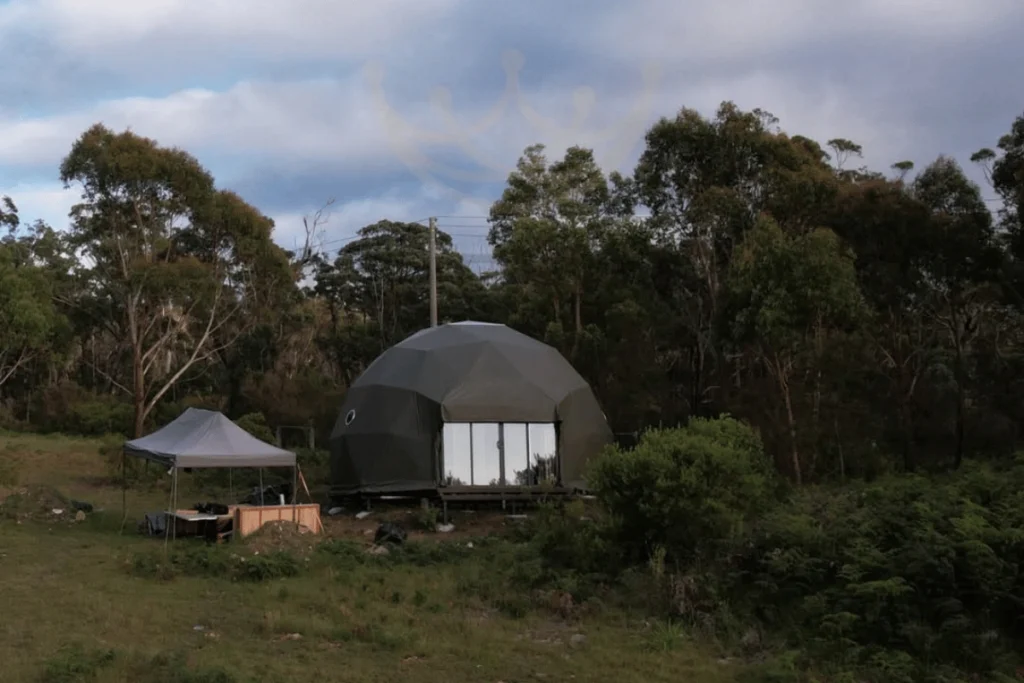
From Mere Compliance to Outstanding Appeal: Turn an Environmental Obligation into a Marketing Asset
“Light-touch” development isn’t about compromise—it’s a powerful upgrade.
We ‘Borrow’ the Land, We Don’t ‘Claim’ It
Whichever foundation type you choose, it preserves the innate beauty of your land to the greatest extent possible—no large-scale grading, no destruction of the original landscape and vegetation. This inherent respect for nature gives you solid footing during environmental assessments.
Make ‘Green’ Your Most Compelling Selling Point
The dome’s spherical structure is a natural partner for solar panels, making off-grid energy independence straightforward. Its curved roof acts as a perfect rainwater catchment system for irrigation and non-potable uses.
When these features shine through in your project’s brochures, they will attract a discerning generation of modern travelers who are not just willing but eager to pay a premium for sustainable experiences.
Stop Leting Regulations Limit Your Vision
When you start seeing glamping domes not just as products but as a core strategy, your entire approach to development transforms. They represent a fundamental understanding: the most exceptional projects are those that skillfully capture market opportunities while thoughtfully honoring the land and its environment.
We are here to help you translate the potential of your site into tangible success, building exemplary projects that deliver both swift returns and lasting value. When you’re ready to explore the full possibilities for your unique piece of land, our team is here to provide a professional preliminary assessment.
Share the Post:
Related Posts

Quick Set Up Tent: Why It Can Boost Participation by 300%
27 October 2025
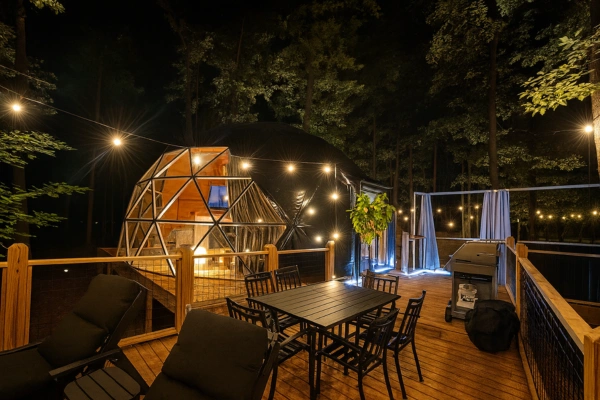
PVC-Glass Hybrid Dome Tent – Power of Sustainable Transparency
18 October 2025
Traditional Luxury Resort Facing Lower ROI?

Traditional Luxury Resort Facing Lower ROI?
- By dream-domes.com
Is your luxury resort a dream destination for travelers, or just another “meh” option?
In this era where experience reigns supreme, traditional luxury resort models are facing unprecedented challenges. High infrastructure costs, long construction timelines, and increasingly “discerning” travelers are placing immense pressure on land investors and operators. When identical hotel rooms no longer make an impact, how do we break through?
The answer might not lie in building taller structures or fancier décor, but rather in breaking down the invisible “walls”—making nature, experience, and innovative accommodations the central attraction.
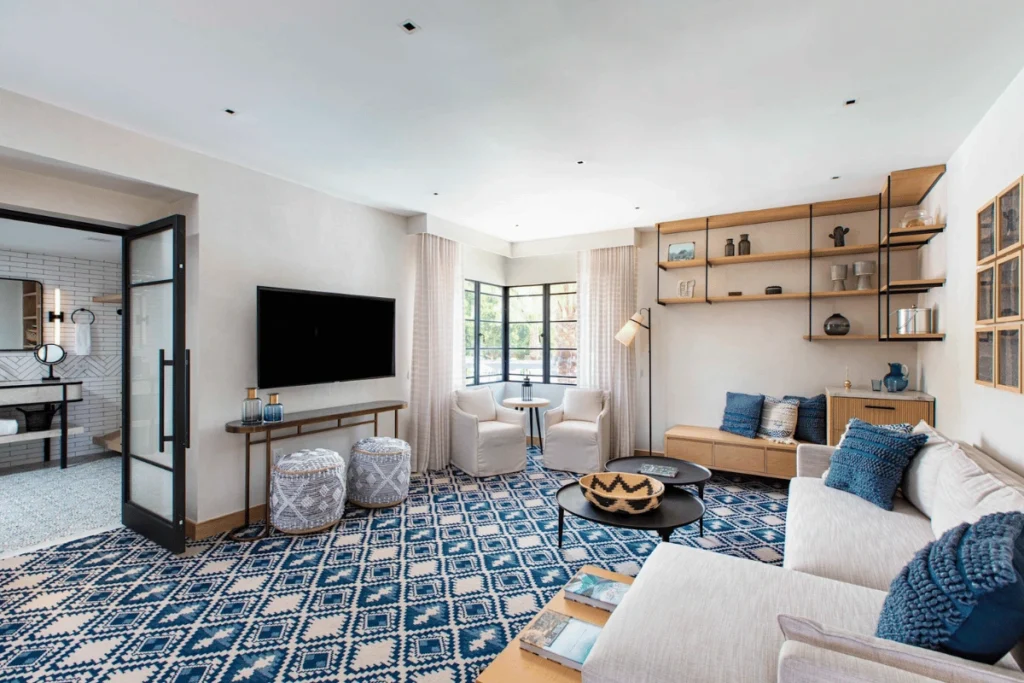
The Future is Here: Three Key Trends and Your Operational Pain Points
Travelers, especially in the affluent European and American markets, have undergone a fundamental shift in their expectations. Ignoring these trends means falling behind in the competition.
trend one
01
The Rise of the Experience Economy
Traveler says: “I don’t just want a bed, I want a story to tell, a unique adventure.”
Your pain point: Standardized rooms and services fail to create memorable moments, leaving you trapped in a price war with little room for brand premium.
trend two
02
Sustainable Travel is Mainstream
Traveler says: “My choices should be more eco-friendly.”
Your pain point: Traditional concrete buildings have a high carbon footprint and conflict with the environmental values of the new generation of eco-conscious travelers, potentially driving them away.
trend three
03
Demand for Personalization and Flexibility
Traveler says: “I want my trip to be one-of-a-kind, with surprises waiting around every corner.”
Your pain point: Heavy investments in fixed luxury resort make it difficult to pivot quickly, and you’re unable to meet niche or rapidly changing market demands, creating high investment risk.
The Solution: Build a "Flexible, Low Impact, High Experience" Accommodation Ecosystem
It’s time for a shift in mindset: from “build a resort” to “weave an experience network.” The key lies in adopting modular, prefabricated high-end glamping (glamorous camping) units.
This model directly addresses the weaknesses of traditional luxury resort:


Quick Deployment
Significantly shortens the timeline from investment to return.
Cost Control
Dramatically reduces the upfront cost per unit, easing financial pressure.
Land-Friendly
Requires minimal earthworks, blending seamlessly into complex landscapes.
Eco-Friendly
A minimal environmental footprint becomes a compelling brand story.
Next-Gen Glamping: How Three Dome Types Target Different Customer Segments
Among the many options, dome tents stand out for their unique geometric structure, durability, and visual impact. They are no longer just tents but containers for unique experiences. We offer three distinct solutions to meet all your needs, from basic to top-tier.
How to stand out in a competitive market? How to create "viral" content that travelers will share on their own?
Solution
The PC Clear Dome boasts a stunning 360-degree panoramic view. More than just a place to stay, it’s a stage—by day, it’s a sunlit art studio in the forest; by night, it transforms into a dreamy space to converse with the stars. This immersive experience has built-in social media appeal, making it a natural engine for Instagram and TikTok success.
Commercial value
Positioned as the “star product” of your luxury resort, especially attractive to couples, friends, and photography enthusiasts. Its high visual appeal allows for premium pricing, boosting your luxury resort’s brand and increasing its social media buzz.
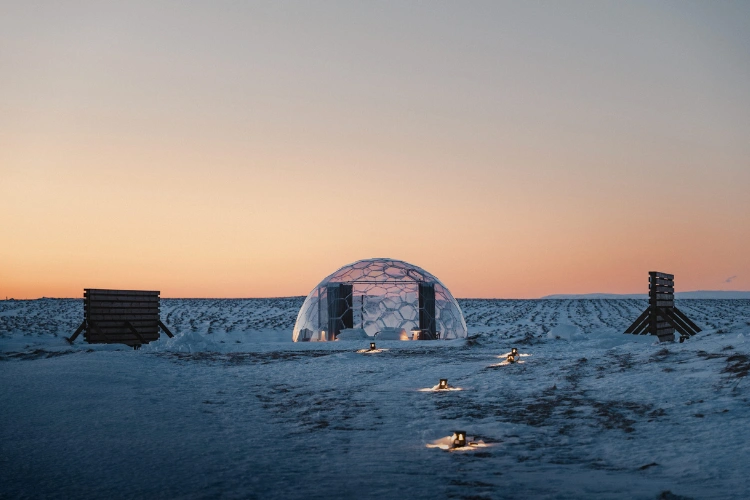
How to balance the wild experience with guest comfort? How to ensure year-round operations in any weather?
Solution
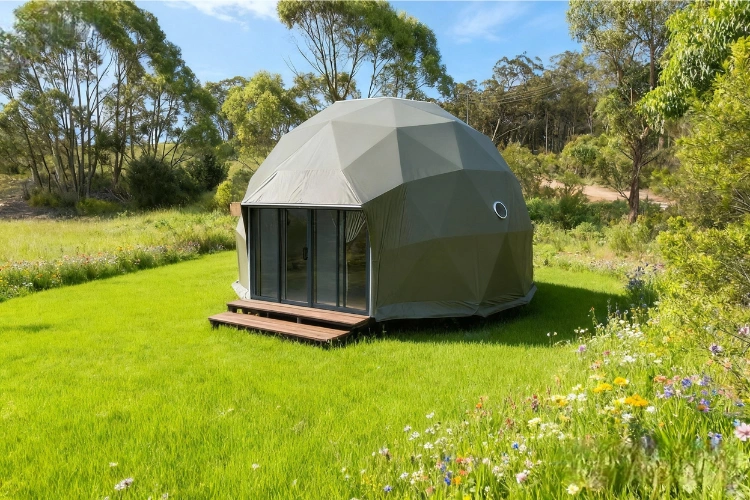
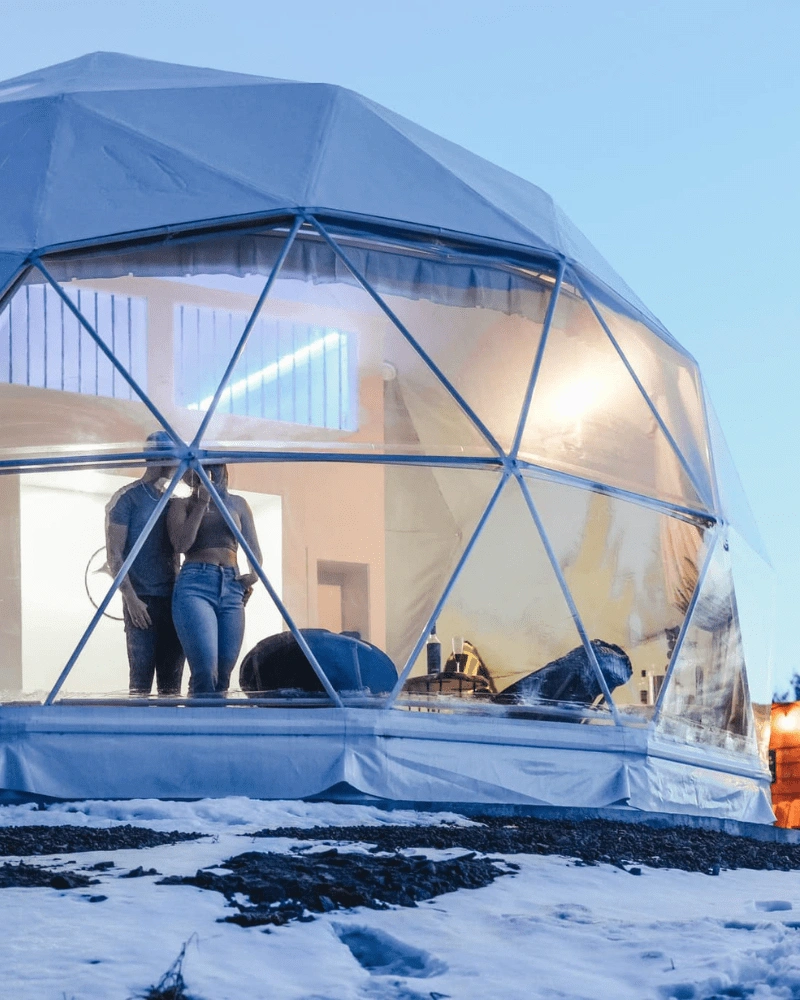
The Hybrid Dome combines durable materials with clever transparent design. It offers superior insulation, warmth, and durability compared to traditional tents, ensuring a comfortable environment during both summer and winter. The carefully designed windows let natural light and stunning views inside, striking a perfect balance between privacy and openness.
Commercial value
This is the most reliable, versatile room type in your project. Ideal for families and comfort-seeking adventurers, it ensures steady occupancy rates and significant revenue, making it perfect for year-round operation.
How to create a flagship experience that can support the highest room rates? How to appeal to guests seeking exclusivity and luxury?
Solution
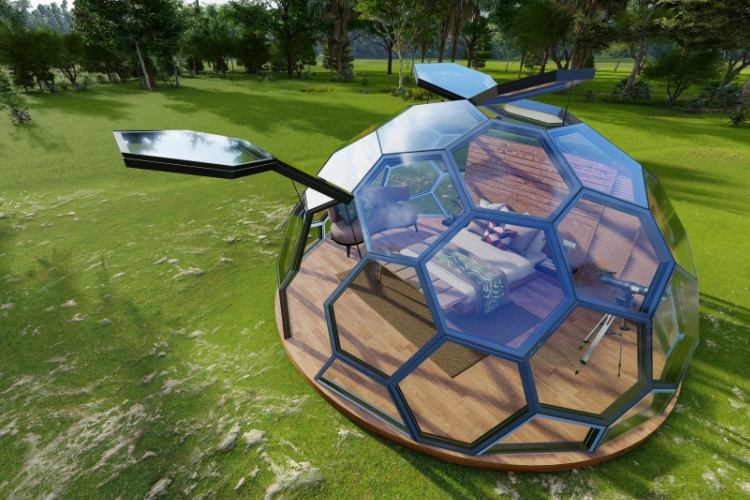
The Glass Dome Tent is the ultimate fusion of luxury and wilderness. Its fully transparent design (or integrated high-quality metal framework) breaks all visual barriers, fully integrating the surrounding majestic views—whether it’s snow-capped mountains, forests, or starry skies—into the living space. It offers an irreplaceable, ultimate romantic experience.
Commercial value
As the “crown jewel” of your resort, it defines your brand’s high-end appeal. Perfect for astronomical observatories, cliffside honeymoon suites, or exclusive luxury retreats. Not only does it directly generate substantial profits, but it also elevates the overall brand positioning of your resort.
From Concept to Profit: Your Investment Return Blueprint
Reduced Risk and Accelerated Payback
Compared to the multi-million-dollar investment in traditional buildings, domes have a lower cost of entry, quicker deployment, and allow you to test markets and generate cash flow faster, shortening the payback period.
Dynamic Pricing Power
Unique experiences are inherently scarce resources. The nightly price for a PC Clear Dome or Glass Dome Tent can be several times higher than a traditional hotel suite, while still attracting customers.
Maximized Land Value
Easily deployable on irregular terrains such as hillsides, woodlands, and waterfronts, turning “difficult” land into highly marketable “view rooms” that maximize your land’s value.
Compelling Brand Story
From day one, your project carries the labels “sustainable,” “innovative,” and “immersive with nature.” This gives you an unparalleled advantage when forming emotional connections with modern travelers.
Now is the Time to Reimagine the Story of Your Land
The future winners won’t be the biggest luxury resort; they’ll be the operators who understand future travelers. These operators will break free from traditional frameworks, using innovative experiences to connect with guests and turning every stay into a cherished memory.
Your land holds unique potential and stories. What we offer is more than just tents—it’s the key to unlocking the future of the travel market.
Now, let’s transform that potential into reality. Contact us to explore how Hybrid Domes, PC Clear Domes, and Glass Dome Tents can turn your land into a landmark, high-profit glamping destination.
Share the Post:
Related Posts
Mastering Glamping Sites Location: Proven Insider Tips
19 September 2025
Luxury Glamping Positioning: The Core of Breaking Through
17 September 2025
Quick Set Up Tent: Why It Can Boost Participation by 300%

Quick Set Up Tent: Why It Can Boost Participation by 300%
- By dream-domes.com
In the fast-paced world of brand marketing, every moment counts. The outdoor event dome is not just a trendy display—it’s a powerful tool for transforming fleeting foot traffic into long-term brand engagement. By utilizing the right design and setup strategy, this clear dome tent can significantly elevate your event’s impact, fostering deeper connections with customers and boosting measurable results.
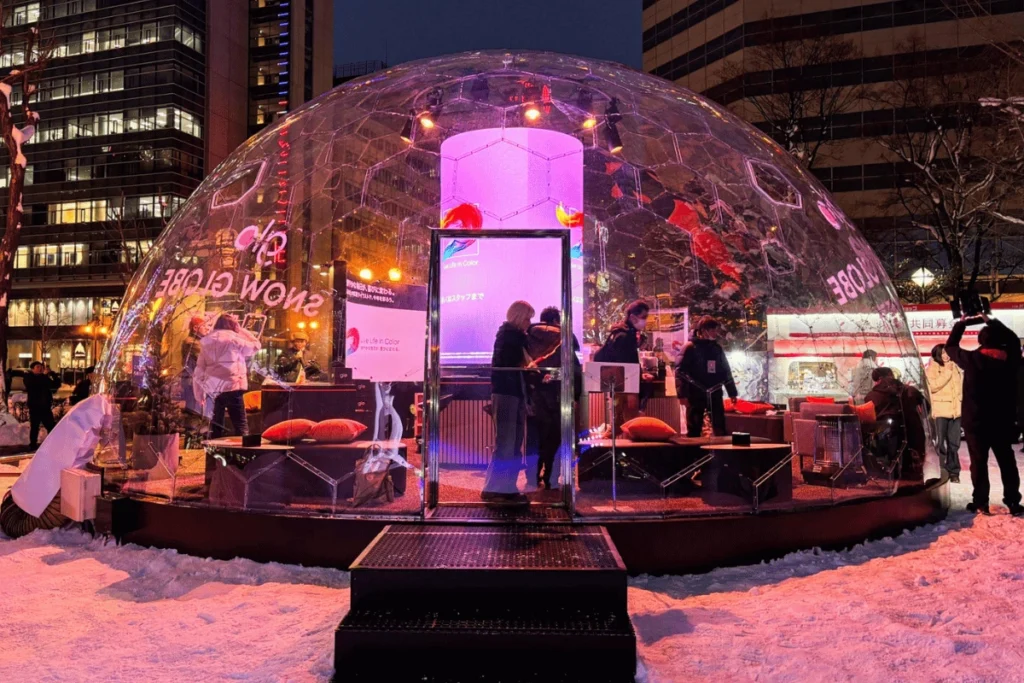
Three-Second Attention Grab: The Power of the pc Dome tent’s Visual Appeal
The pc dome tent with its mirrored exterior and fully transparent design can capture the attention of passersby from over 10 meters away, with a foot traffic interception rate increased by up to 40%. A well-placed slogan at the entrance delivers value in just two seconds, encouraging visitors to explore further. Inside the dome, strategically placed photo spots allow guests to create memorable moments, naturally increasing engagement.
For one brand, the entrance dwell time increased by 2.3 times, directly contributing to better conversion rates and longer visitor stays.
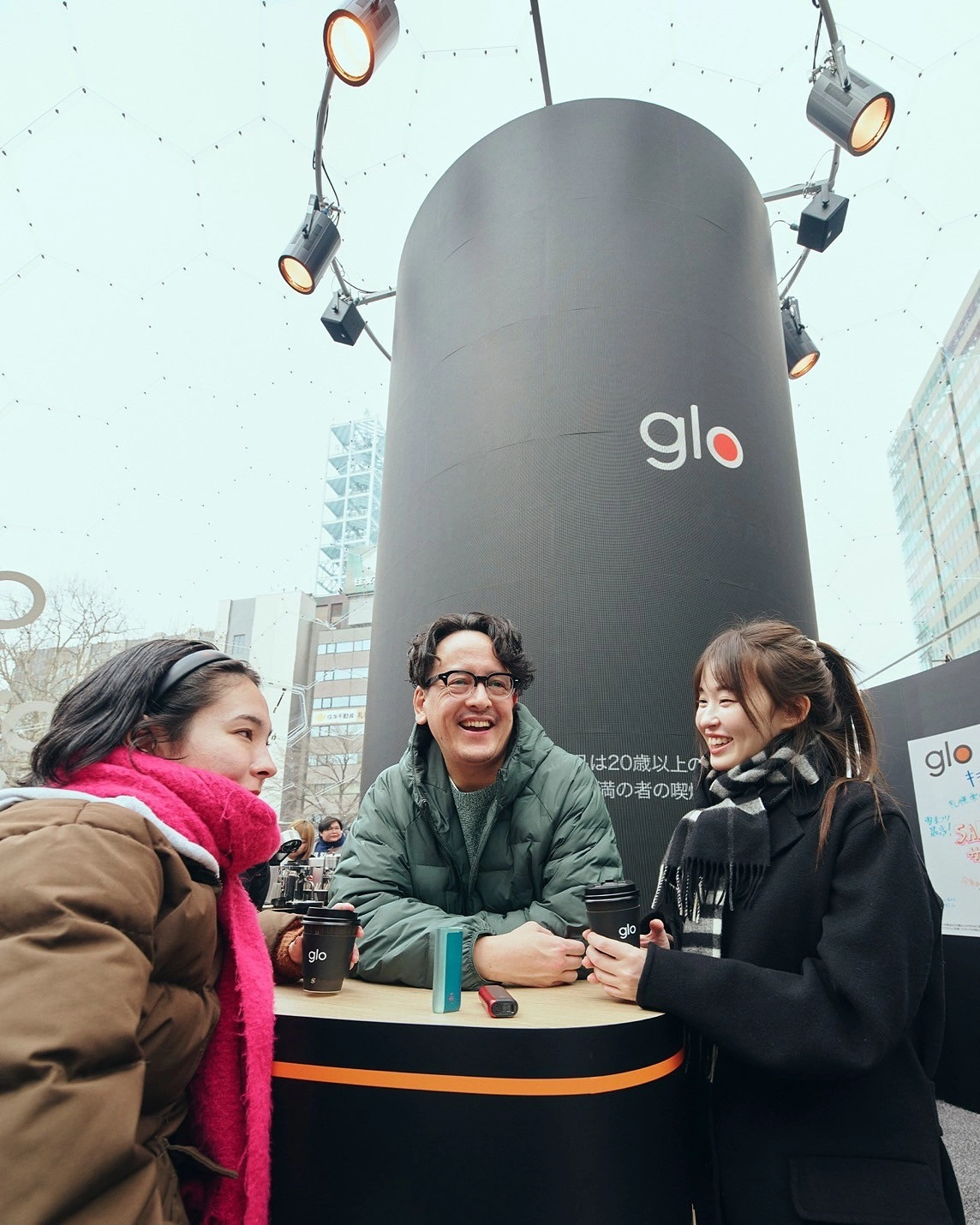



Deep Engagement: From Browsing to Immersion in the Outdoor polycarbonate Dome
The spherical layout of the quick set up tent naturally guides visitors through different zones, creating a journey that moves from quick awareness to deeper interaction. The first circle introduces the key product features in 30-60 seconds, encouraging visitors to stay longer. The second circle allows for light engagement, such as tactile experiences and semi-open product trials. In the third circle, visitors participate in deeper conversations, helping them make informed decisions without feeling overwhelmed.
This thoughtful progression, paired with calming 60-80 BPM background music, promotes natural trust-building, ensuring visitors linger and return to your brand for future interactions.
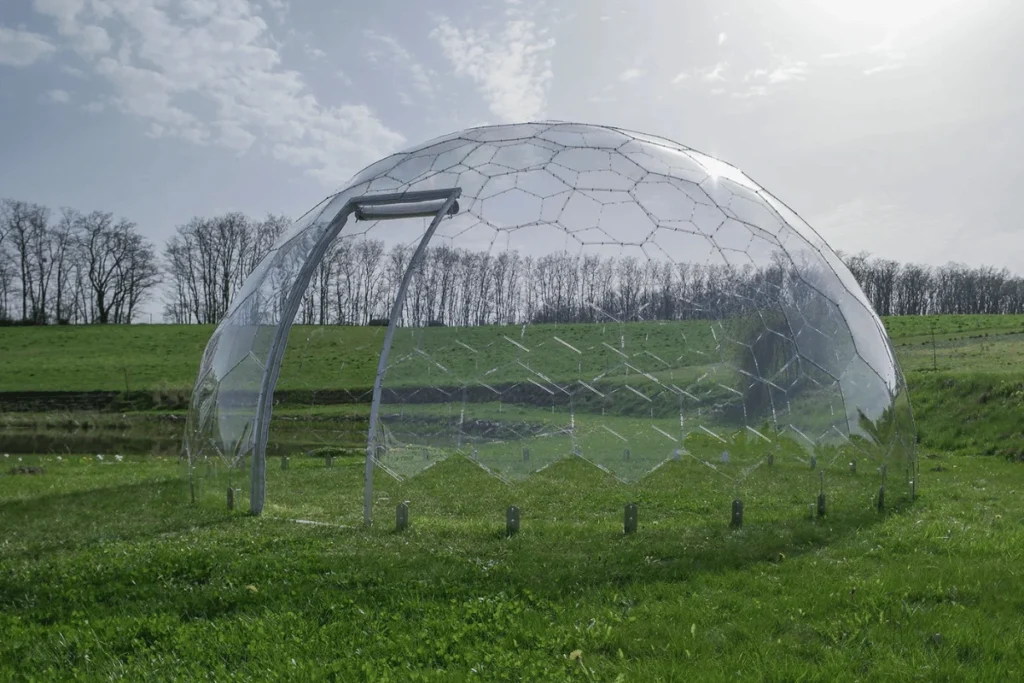
Fast Setup: Standardizing Processes for the quick set up tent
A seamless event experience is heavily reliant on setup speed and efficiency. The clear igloo tent transforms complex setups into standardized processes through modular panels and hardware. By utilizing a strict timeline—ranging from initial qualification packages two weeks before the event to pre-launch activities three days ahead—we ensure quick, hassle-free installations. With a team of 2-4 people, setup time averages under 4 hours, minimizing delays and reducing overall event costs by 25-35%.
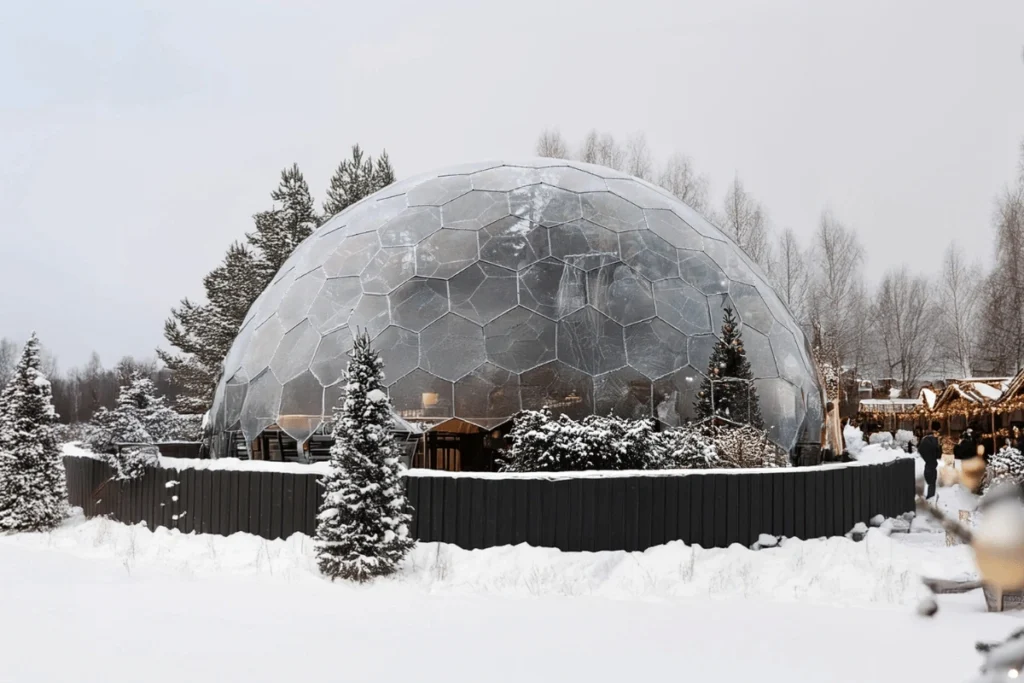
Compliance and Safety: Making Regulations a Part of the Creative Design
In addition to providing brand engagement, the quick set up tent meets the highest standards of compliance and safety. The tent comes with all necessary documentation, including structural reports for wind, snow, and load-bearing capacities, along with certifications for fire resistance. This makes approval and on-site checks easy, allowing you to focus on creating memorable brand experiences while ensuring your event meets all safety regulations.
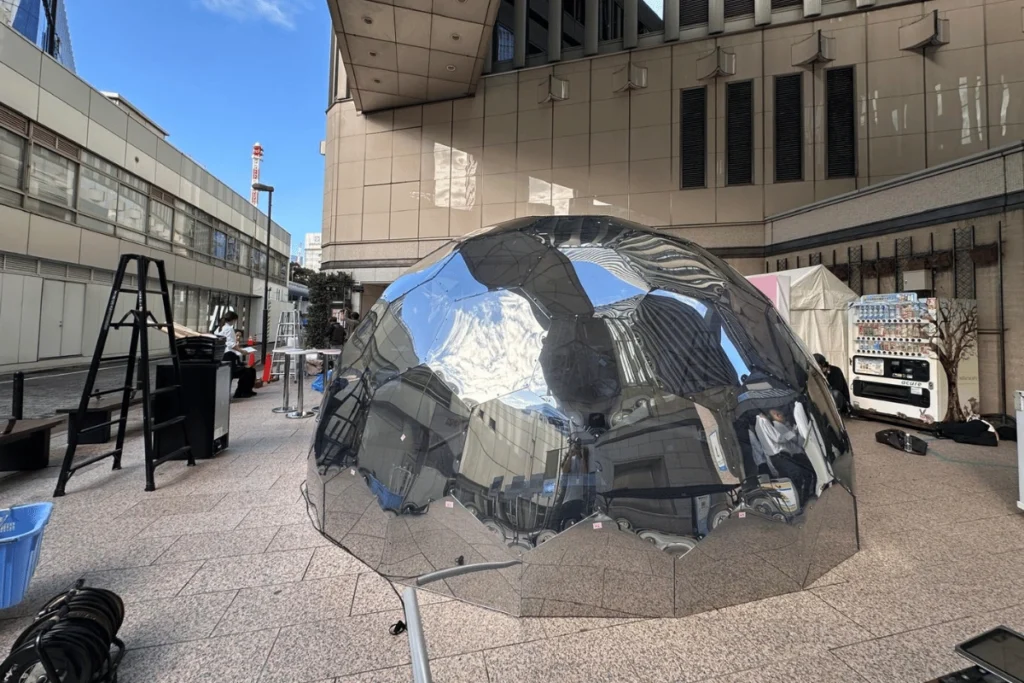
Maximizing Brand Exposure: Using the creative Dome tent for Multi-City Activation
One of the biggest advantages of the Outdoor Igloo Dome is its versatility. Instead of a one-time use, the structure can be adapted into a “themed season” for use across different cities. By collaborating with local businesses like cafes or fashion stores, brands can exchange traffic pools and expand their reach. Post-event reports, including foot traffic, UGC, and lead generation, allow brands to fine-tune their strategy for future events, enhancing engagement in new markets.
With the ability to replicate successful setups across multiple locations, the tent enables brands to build a long-term, sustainable presence while reducing costs.
The outdoor pod is more than just an event structure—it’s a robust, data-backed brand growth system. When each event is executed with this innovative dome, it turns brand engagement into a strategic, repeatable process that delivers measurable growth and sustainable success.
By adopting the outdoor pc dome tent, you ensure that your brand’s presence at every event is not only impactful but also poised for success in the future.
Share the Post:
Related Posts
The Hidden Costs of Buying a Empty Dome Structure
5 September 2025
Glamping Domes for Sale: Start Your Profitable Campsite
4 September 2025
PVC-Glass Hybrid Dome Tent – Power of Sustainable Transparency

PVC-Glass Hybrid Dome Tent – Power of Sustainable Transparency
- By dream-domes.com
The world of glamping dome tents is evolving. Travelers today want more than a comfortable stay—they crave design that connects them to nature while reflecting their values of sustainability and authenticity.
Transparency, once a visual delight, has become a design philosophy—one that blurs the boundaries between interior and environment.
Yet one question continues to challenge glamping architects and designers: Can transparency be both beautiful and sustainable?
This is where the PVC-Glass Hybrid Dome Tent redefines what an outdoor dome tent can be.
When PVC Dome Tents Reach Their Limit
For over a decade, PVC domes have shaped the identity of the modern glamping movement.
They are lightweight, adaptable, and easy to assemble—ideal for eco-resorts, boutique camps, and pop-up installations.
But prolonged exposure to sunlight and weather can cause yellowing, brittleness, and visual cloudiness. These issues shorten the lifespan of traditional PVC structures and diminish their signature clarity.
We’re not here to reject PVC—it remains a brilliant and flexible material.
We’re here to ask:
How can we extend its life, preserve its clarity, and make it part of a more sustainable design language?


Blending PVC Flexibility with Glass Durability
The Birth of the PVC-Glass Hybrid Dome Tent
The answer lies in fusion—combining PVC’s adaptability with glass’s timeless resilience.
The PVC-Glass Hybrid Dome Tent brings the best of both worlds together:
PVC cover allow flexibility, easy transportation, and smooth assembly.
Glass modules introduce structural stability, weather resistance, and long-lasting transparency.
This hybrid design transforms the glamping dome tent into a structure that not only blends with the landscape but also endures through seasons and time.
It’s a new equilibrium—where softness meets strength, and comfort meets clarity.
Sustainable Transparency: Beyond Materialst
Sustainability isn’t only about recycling or reducing carbon impact—it’s about longevity and emotional durability.
1. Structural Sustainability
By integrating glass into the dome architecture, the hybrid dome tent maintains its visual purity and integrity for years.
Fewer replacements mean reduced material waste and lower long-term maintenance costs—a quiet yet powerful form of environmental responsibility.
2. Psychological Sustainability
Light-filled, transparent spaces nurture calm and connection.
Waking to a forest sunrise or falling asleep beneath a starry sky fosters a sense of continuity and peace.
This is sustainable living not in resources alone, but in spirit and experience.
True sustainability endures not just in structure, but in the emotions it sustains.
Redefining the Future of Glamping Dome Design
The PVC-Glass Hybrid Dome Tent opens new design possibilities for eco-resorts, luxury camps, and nature-inspired hotels. It elevates the comfort of traditional glamping tents, while preserving the immersive connection to the outdoors that travelers seek.
Whether standing on a coastal hill or hidden in a forest glade, every PVC-Glass Hybrid Dome Tent becomes a living lens between human and landscape, also creates a balance—shelters that breathe with their surroundings while standing resilient through time.
Inside, time slows, light shifts, and the boundary between shelter and sky disappears—a transparent harmony that turns glamping into something lasting and alive.
The Future Is Clear
The evolution of the outdoor dome tent isn’t about building larger or brighter—it’s about building clearer and longer-lasting.
Transparency has become more than an aesthetic; it’s a responsibility to both environment and experience.
The PVC-Glass Hybrid Dome Tent embodies this clarity—proving that sustainability and beauty can coexist under one structure.
Share the Post:
Related Posts
What Many Glamping Operators Regret After Buying Dome Tent
27 August 2025
Mastering Glamping Sites Location: Proven Insider Tips

Mastering Glamping Sites Location: Proven Insider Tips
- By dream-domes.com
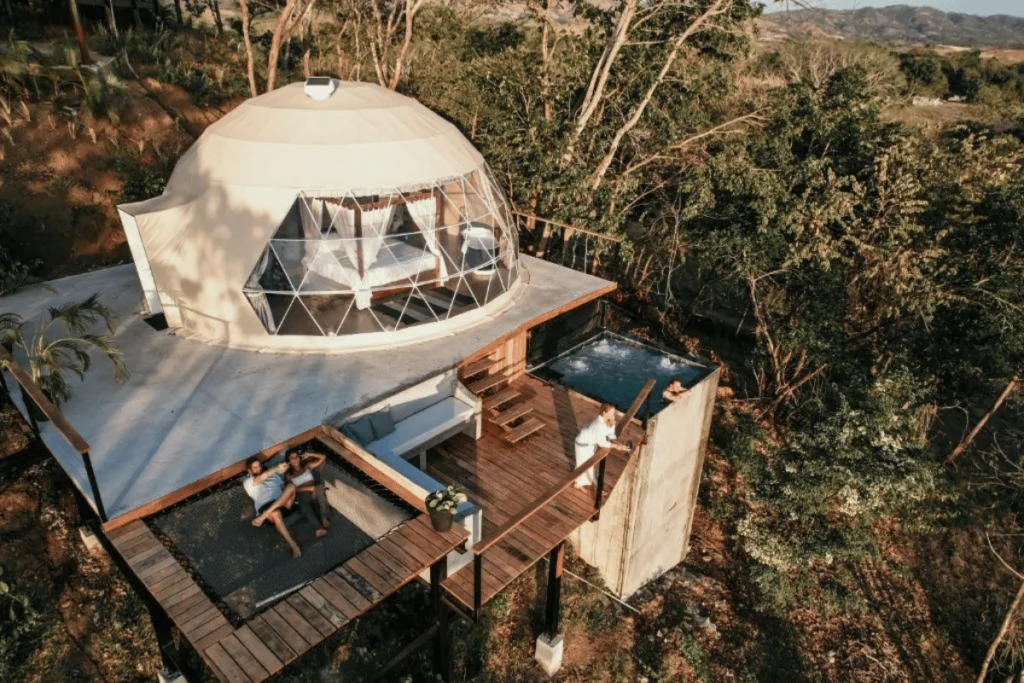
Location Is More Than Just a Piece of Land
In this industry, choosing a glamping sites is never as simple as picking scenic land. It’s about defining your guest experience, shaping your business model, and setting the foundation for long-term profitability.
Even the most premium Glamping Dome Tent setup can’t compensate for a poor site. As one experienced operator put it: “A good location makes operations twice as effective; a poor one makes them twice as hard.”
Today, instead of vague advice, we’ll walk you through a practical framework for evaluating land. It’s based on real-world experience from building profitable glamping sites—not academic theory.
The Four Pillars of Excellent Glamping Sites Selection
1. Market & Guest Segments: Where Are Your Customers?
Have you considered how far your ideal guest is willing to drive for the right experience?
For instance, a client in Northern Europe originally built in a remote forest hoping to attract luxury honeymooners. Data showed, however, that 75% of bookings came from families within a two-hour drive. By adding family-friendly units, occupancy rates grew by 40%.
Key questions to assess:
- Who are you targeting—families, adventure travelers, or luxury couples?
- What’s the population within a 1.5–3 hour drive (the golden rule of reach)?
- Does the site itself carry “destination value,” or does it depend on nearby attractions?
- How strong is local competition, and can you collaborate with surrounding businesses?
2. Land & Regulations: Can You Legally Operate Here?
This is where many smart investors stumble. Zoning is the first barrier—never assume or rely on verbal promises. You must have written proof that the land allows a campground or glamping operation.
Key considerations:
- Zoning category: agricultural, commercial, or tourism use? Written confirmation is critical.
- Infrastructure: feasibility and cost of water, power, and sewage access.
- Land ownership or lease terms: purchase vs. long-term lease; restrictions in the contract.
- Environmental constraints: Is it within a protected zone, wetland, or forestry red line?
Pro tip: As a Glamping Dome Tent Supplier, we’ve seen domes offer unique advantages here. Minimal ground disturbance means in some regions you can bypass heavy foundation permits—saving both cost and time.
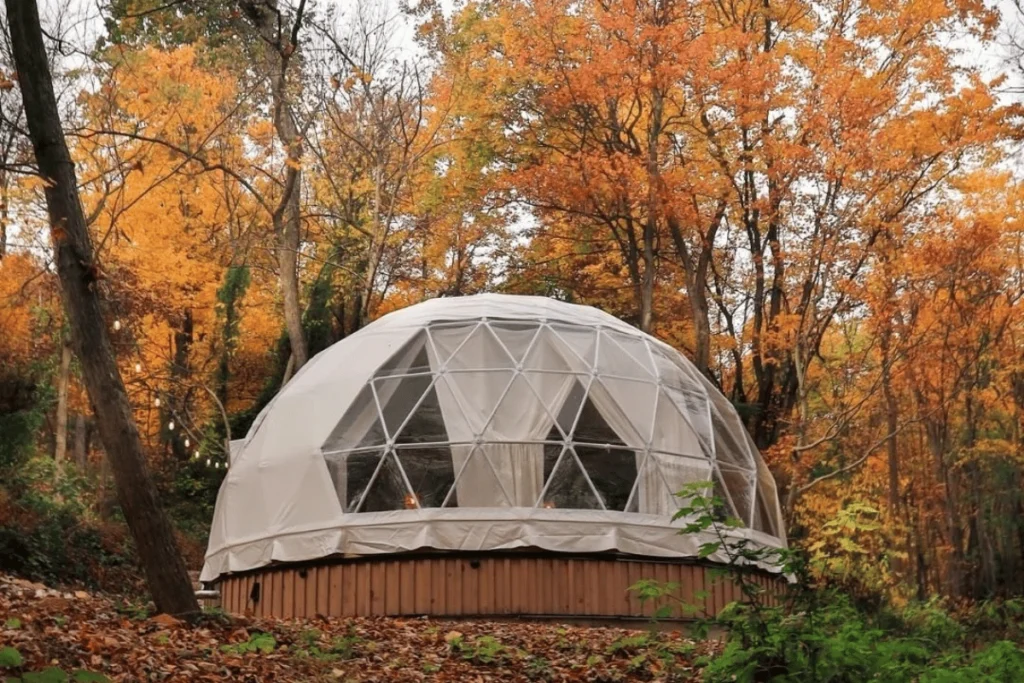
3. Natural Environment & Experience: What Is Your Core Selling Point?
Your landscape is your product. Nature itself is your interior design. How do you evaluate the “experience value” of a plot?
Lakeside/Riverside: Romantic, high-value, but flood and humidity risks must be managed. One Swiss glamping sites solved this with adjustable platforms.
Mountain/Forest: Immersive and premium, but construction and maintenance costs rise. Consider tree spacing, sunlight, and falling rock risks.
Suburban/City Edge: Stable demand and repeat guests, but strong differentiation is required to stand out.
Wilderness/Desert: Unique value, but requires high infrastructure investment and creative operations.
Checklist:
- Scenic value: snow peaks, lakes, forests, starlit skies?
- Micro-climate: wind, sunlight, seasonal risks (floods, droughts, snowfall).
- Privacy: natural vegetation as dividers between units.
- Ecological balance: control of insects or wildlife impact.
4. Accessibility & Infrastructure: How Easy Is It for Guests to Arrive?
The “last ten kilometers” often decide your booking conversion rate.
One Australian site discovered that paving a 3 km gravel road and adding clear signage reduced booking cancellations by 65%.
Key factors:
- Road conditions: Can all vehicles access year-round, or do guests need 4WD?
- Mobile signal & Wi-Fi: today’s “semi-offline” essential.
- Noise pollution: distance from highways or industrial activity.
- Safety: geological hazards, wildfire risk.
- Nearby support: emergency facilities within a 30-minute drive.
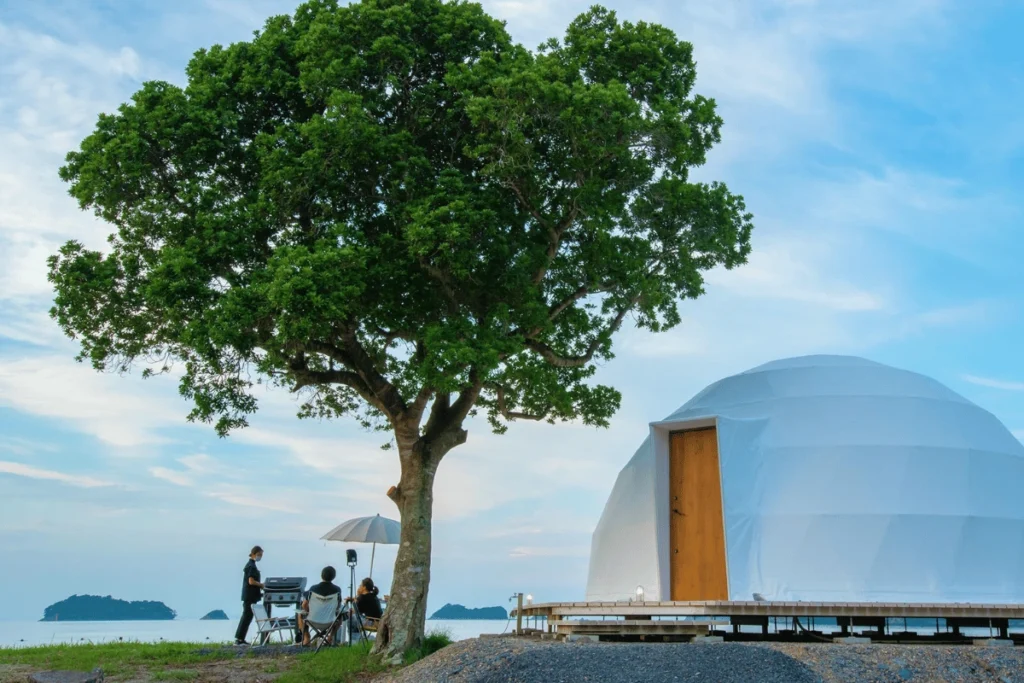
From Theory to Practice: Your Action Plan
Knowing is easier than doing. To help you act on this framework, we’ve created a Glamping Site Selection Checklist with 50 evaluation items and scoring criteria. Email us at info@dream-domes.com, with the subject line “Site Checklist,” and we’ll send it directly to you.
Site selection is the foundation of your dream project. We understand you’re not just buying a tent—you’re creating a destination where people reconnect with nature.
As a trusted Glamping Dome Tent Supplier, we’re more than product providers—we’re partners in your success. If you’ve shortlisted land options, share coordinates and photos with us. Our team is happy to give free advice from both a design and construction perspective.
Share the Post:
Related Posts
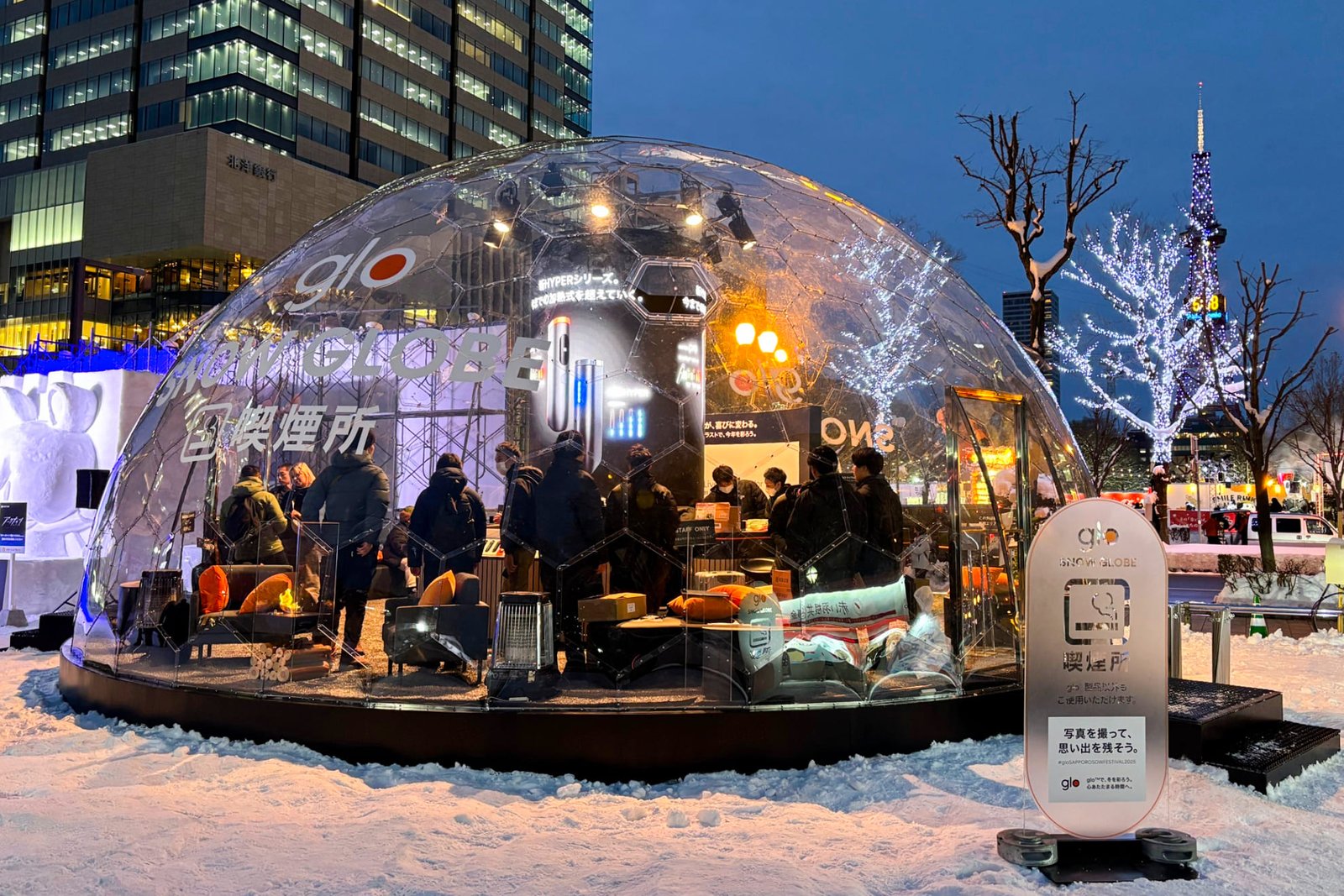

Luxury Glamping Positioning: The Core of Breaking Through

Luxury Glamping Positioning: The Core of Breaking Through
- By dream-domes.com
In recent years, the global wave of luxury glamping has transformed tents from simple shelters into vessels of imagination. They now embody the “poetry of travel”: some are built in vineyards, where guests sip wine under the stars; others sit at the foot of snowy peaks, with ski runs just beyond the doorway; still others rise by quiet lakes, turning morning mist into part of the stay itself.
With more options has come more sameness. Step into some camps and you’ll see: stylish décor without a soul, activities that feel busy but forgettable. Price wars follow, and profit margins get squeezed.
The camps that truly stand out don’t win by doing “more,” but by doing the right thing—by nailing their positioning.
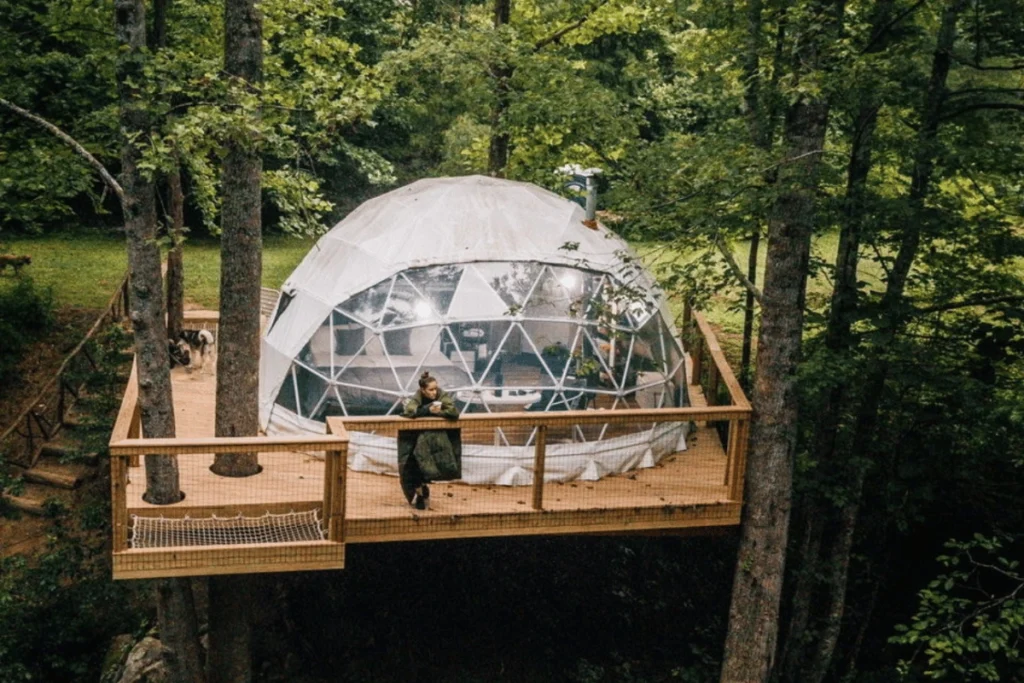
Luxury Glamping Positioning: Not Just a Label, But the Soul
wild
luxury
family-friendly
Many operators mistake positioning for a label: “luxury,” “family-friendly,” “wild.” But for guests, these words don’t answer the real question: Why should I choose you?
Positioning is better understood as a mental anchor. In the minds of your target audience, what do you represent?

For young couples
maybe you’re the setting for their first romantic getaway.
For multigenerational families
you’re a safe place where kids can run free and adults can truly rest.

For adventurers
you’re a basecamp to step away from the city and test their limits.
How Do You Find Your Positioning?
Look Outward – Study the Market
Every campsite highlights something: family activities, starry skies, outdoor sports. Instead of copying, pay attention:
Which needs remain unmet? Which guest expectations are still waiting for the right camp to fulfill them?
Perhaps city dwellers want to travel with pets, but pet-friendly camps are rare. Or maybe affluent families are willing to pay for “privacy and customization,” yet few places deliver on it.
Look Outward – Study the Market
Luxury glamping site positioning can’t be invented in a vacuum. It must match your reality. Is your site lakeside, or hidden in the woods? Does your team excel at food, adventure, or family programming? Can your budget support luxury amenities, or does a lean model make more sense?
Even your story matters. A camp created by an artist feels different from one built by an adventurer—and that difference is part of your brand.
Look Toward the Guest – Understand Their Heart
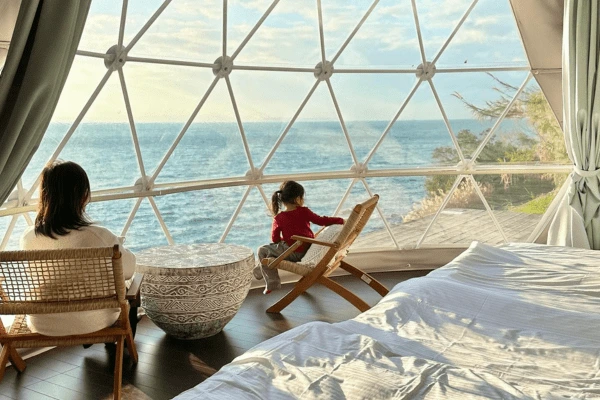
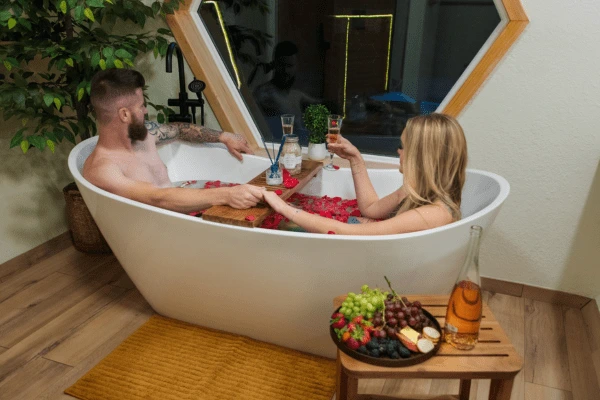
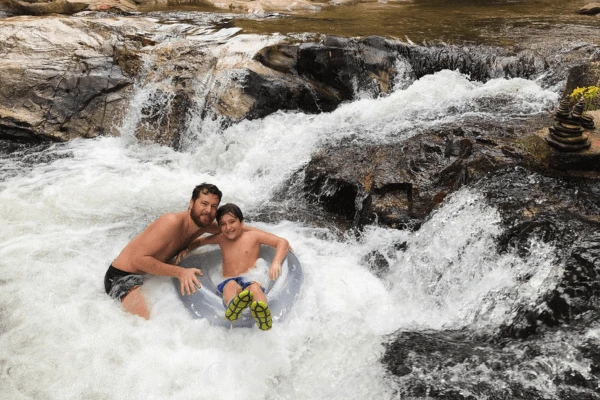
When you can clearly answer: who you serve, what problem you solve, and how you’re different, your positioning is set.
Let Positioning Flow Into Every Detail
Once defined, positioning should be reflected in every part of the experience.
- Accommodation design: Romantic camps lean on stargazing domes; family camps invest in safe play zones; adventure camps may use treehouses or wild platforms. Interiors should echo the same tone.
- Service details: High-end guests expect butler-style service and tailored activities; families want educational fun; thrill-seekers need expert guides and proper gear.
- Pricing & channels: Price itself signals positioning. Too low for a “luxury” camp and guests may doubt your quality. Likewise, Airbnb attracts different audiences than Glamping Hub.
- Storytelling & branding: A luxury glamping site isn’t just a place to sleep—it’s a story. Tell guests who you are, why you built it, and what values you stand for. A compelling story can be more persuasive than ads.
Common Positioning Mistakes to Avoid
- Trying to please everyone: You end up appealing to no one.
- Overpromising, underdelivering: Call it “luxury” but don’t offer hot water? That’s a recipe for bad reviews.
- Cultural insensitivity: When borrowing local traditions, show respect and appreciation, not appropriation.
- Ignoring safety and compliance: Especially with water sports or climbing, skipping proper permits and insurance can be disastrous.
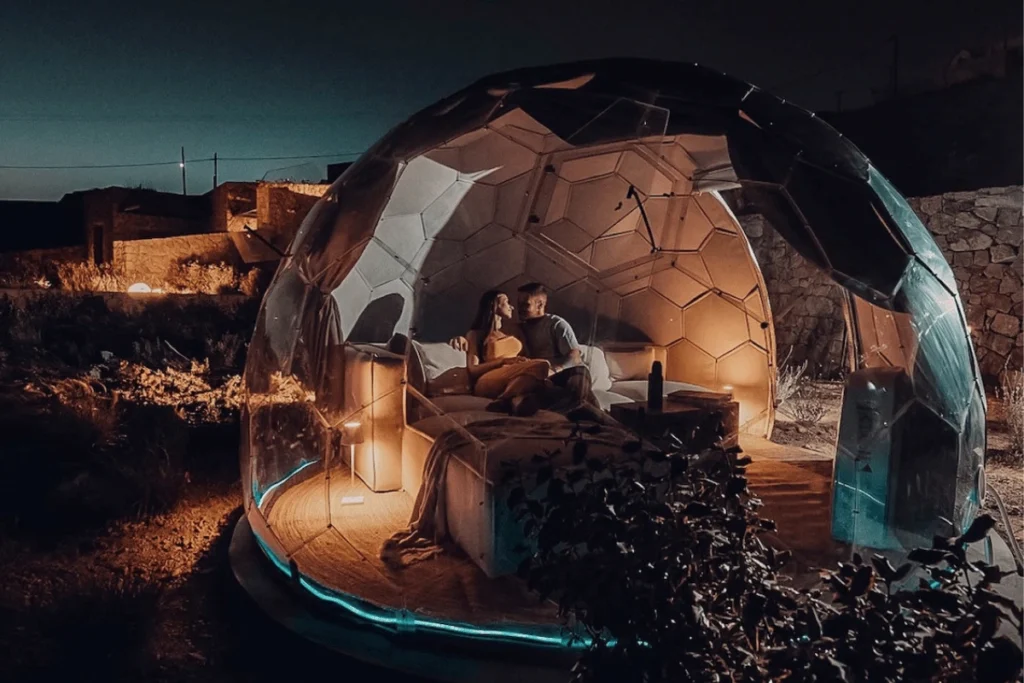
Positioning Defines Your Future
In a crowded market, you won’t win over everyone. But you can win over the right ones—the guests whose values, stories, and desires align with what your camp offers.
Positioning is the art of choosing. And once chosen, it aligns everything else: design, service, pricing, marketing. A camp with sharp positioning grows from being just a lodging option into a lifestyle symbol. It escapes the price war, builds pricing power, wins loyal guests, and weathers economic shifts with stability.
So before building your camp, ask yourself: Who do you want to be remembered by? What can you offer that no one else can? Why is your camp truly one of a kind? The answers may not be complicated. But they’ll decide whether your camp breaks through—or fades away.
Share the Post:
Related Posts
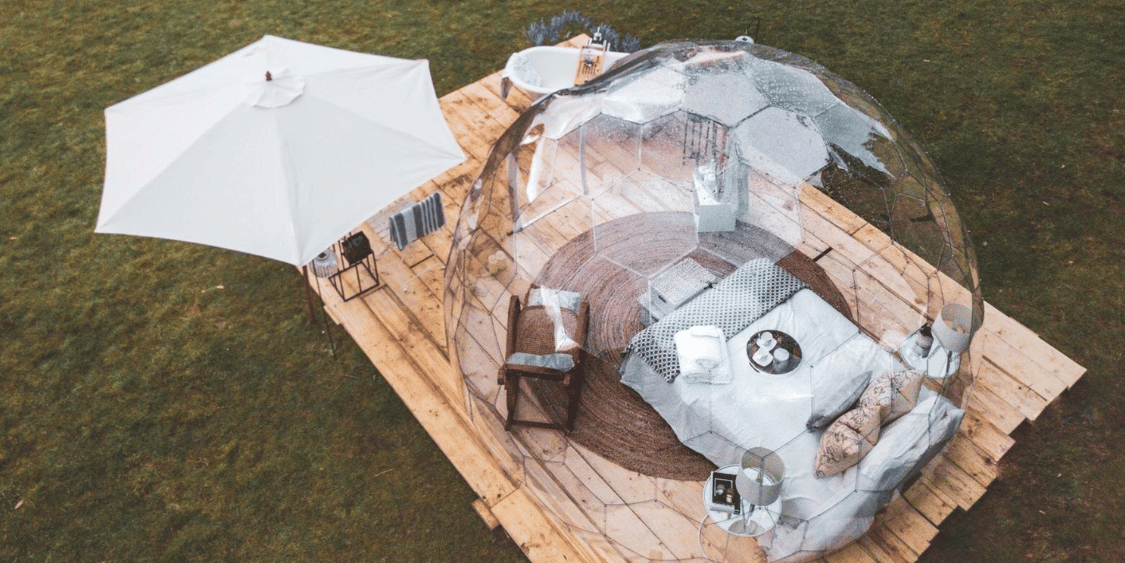

Garden Decor 2025: The Rise of Clear PC Dome Tents
17 January 2025
The Hidden Costs of Buying a Empty Dome Structure

The Hidden Costs of Buying a Empty Dome Structure
- By dream-domes.com
Have you ever thought that ordering a beautiful dome structure is all it takes to launch a glamping site? Buy a dome tent, set it up on your land, add some simple décor, and you’re ready to welcome guests?
Many campsite owners start with this assumption—only to realize later that it’s just the first step of a much longer journey.
The real challenges often hide behind the “finished look” of a dome structure: missing facilities, material aging, seasonal limitations, and lack of after-sales support. These hidden costs drain budgets, lower guest satisfaction, and damage reputation. Buying only the structure is like purchasing a car without wheels or an engine.
In this article, we’ll uncover the hidden costs of a dome structure and explain how to avoid the pitfalls—saving you time, stress, and money.
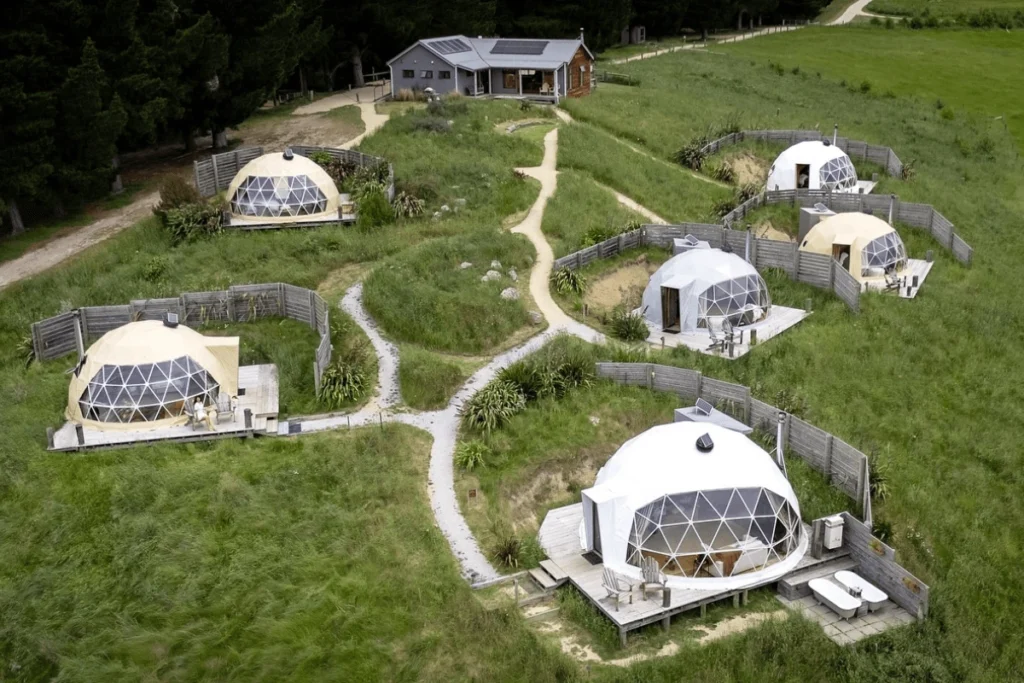
Hidden Costs in the Dome Structure Industry: Six Painful Bottlenecks
Hidden Cost #1:
Missing Facilities — Just an Empty Shell
reality
A bare dome structure without flooring, plumbing, power connections, or bathroom. You’ll need to source extra contractors, coordinate installations, and solve compatibility issues.
consequence
Budgets spiral, timelines slip, and guest reviews suffer. The cost is not just financial, but also reputational.
Turnkey solution
Pre-fabricated flooring, modular bathrooms, and standardized water/electric interfaces delivered as one package. Everything fits seamlessly—like building with LEGO.
Hidden Cost #2:
Seasonal Downtime — Operating Only Half the Year
reality
Basic dome tents lack insulation. In summer they feel like greenhouses, in winter like ice huts. This forces operators into short seasonal cycles.
consequence
Occupancy drops, revenues sink, and discounts eat away at profits. Empty domes equal wasted capital.
Turnkey solution
Upgraded insulation layers and climate control systems enable four-season operation. More open days = higher annual income and faster ROI.
Hidden Cost #3:
Beautiful But Short-Lived — The PVC Window Trap
reality
Most suppliers use PVC for panoramic windows. Clear at first, but after 1–2 years, it turns yellow, foggy, or cracks.
consequence
Frequent replacements, rising costs, and frustrated guests. Your “stargazing dome” quickly loses its appeal.
Turnkey solution
High-strength glass windows that never yellow or blur. A permanent upgrade that preserves your dome structure’s wow factor.
Hidden Cost #4:
Weak Guest Experience — Hard to Justify Premium Rates
reality
DIY interiors often lead to poor insulation, weak soundproofing, and mismatched décor. Guests see it as a “fancy tent,” not a boutique hotel.
consequence
You can’t justify premium pricing, profit margins shrink, and competition with traditional hotels becomes impossible.
Turnkey solution
Hotel-grade interior design and modular furnishing. From acoustic comfort to cohesive style, everything supports higher nightly rates.
Hidden Cost #5:
Maintenance Headaches — No After-Sales Support
reality
Many dome suppliers only sell the shell. If leaks, storm damage, or structural issues arise, you’re left on your own.
consequence
Operations are interrupted, income lost, and owners become part-time repairmen.
Turnkey solution
Full lifecycle support: from installation guidance to after-sales service. More than a supplier—we become your long-term partner.
Hidden Cost #6:
Unclear Positioning — Caught Between Camping and Hotel
reality
If the hardware feels inconsistent—wild exterior but basic bathrooms—guests get confused. Is it camping, or luxury lodging?
consequence
Weak branding, unclear target audience, and poor marketing results.
Turnkey solution
An integrated package naturally defines your brand as high-end glamping. Guests instantly recognize the value proposition without explanation.
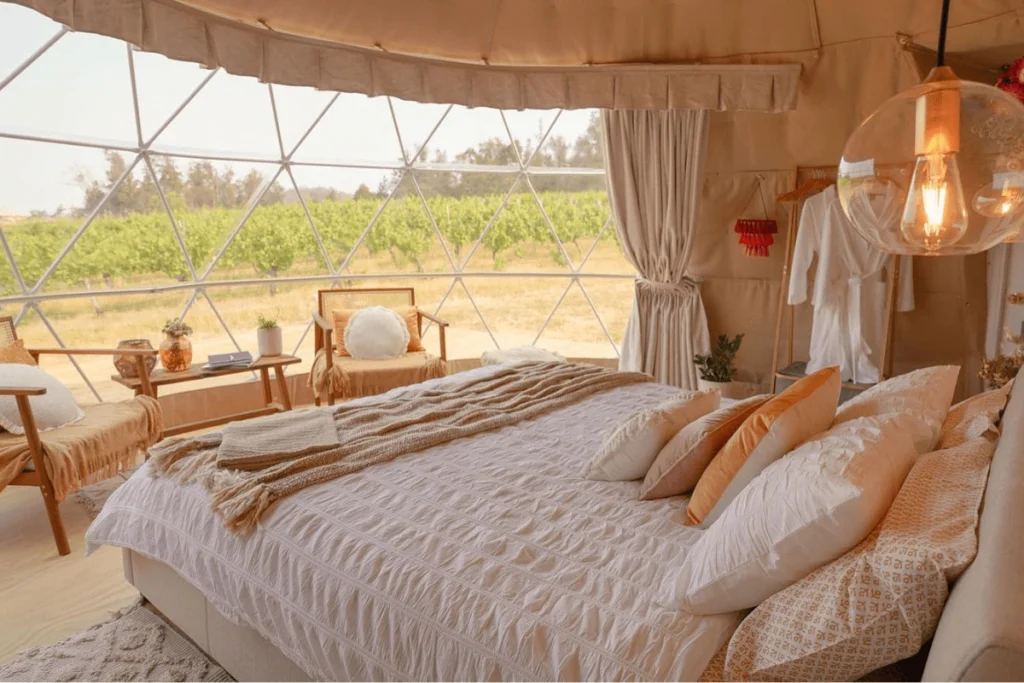
Turning Hidden Costs Into Visible Value With a Turnkey Dome Structure Package
It’s time to shift perspective. You’re not just buying a “tent shell”—you’re investing in a complete hospitality product. A turnkey dome structure solution transforms invisible risks into a clear, controllable investment.
The smarter investment isn’t the cheapest option—it’s the one that avoids long-term costs and accelerates profitability.
Our Integrated Solutions: Tackling Every Pain Point
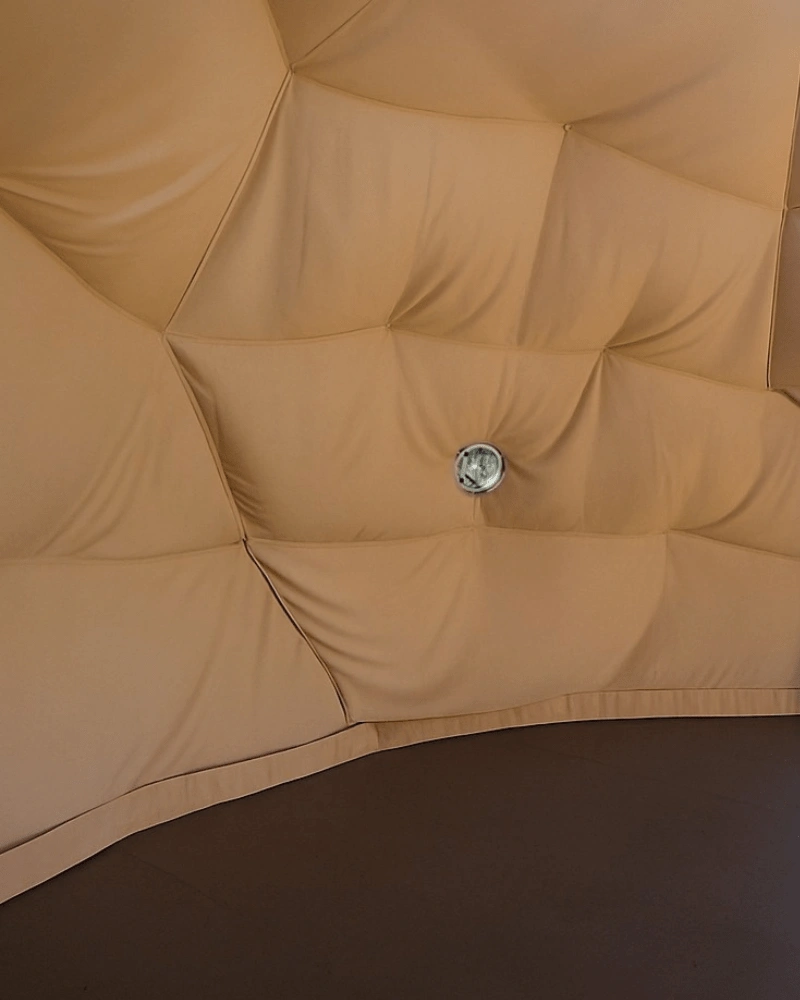
Year-Round Operation
Advanced insulation + HVAC for all-season comfort.
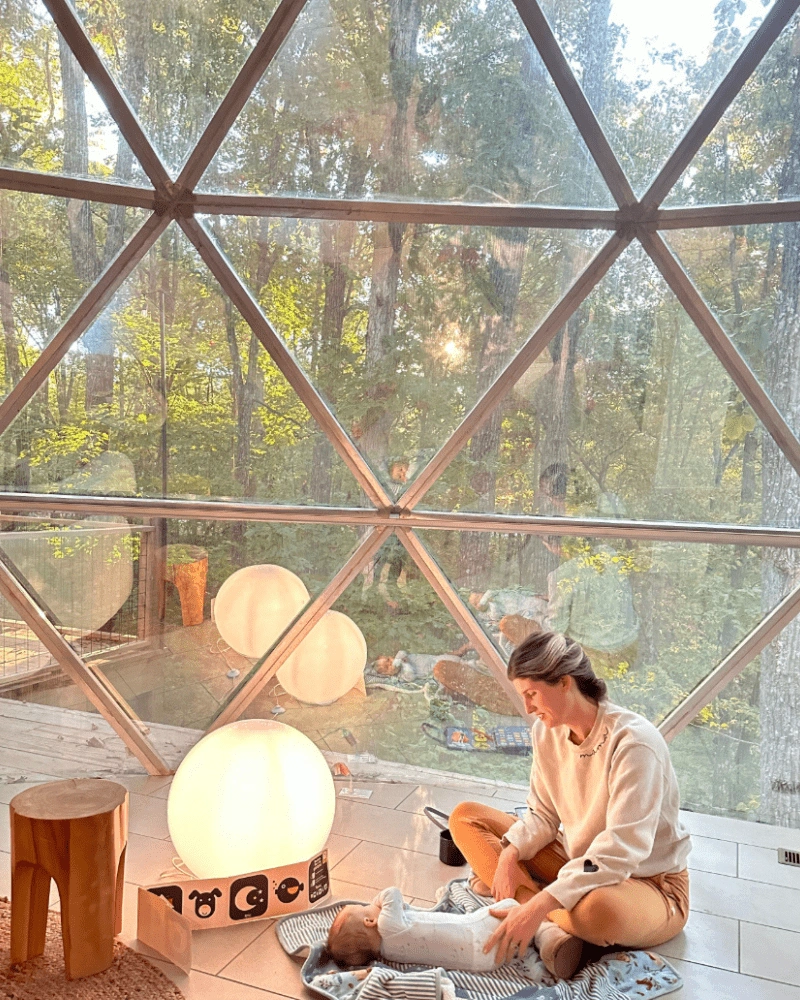
Permanent Transparency
Glass panels instead of PVC—no yellowing, no complaints.
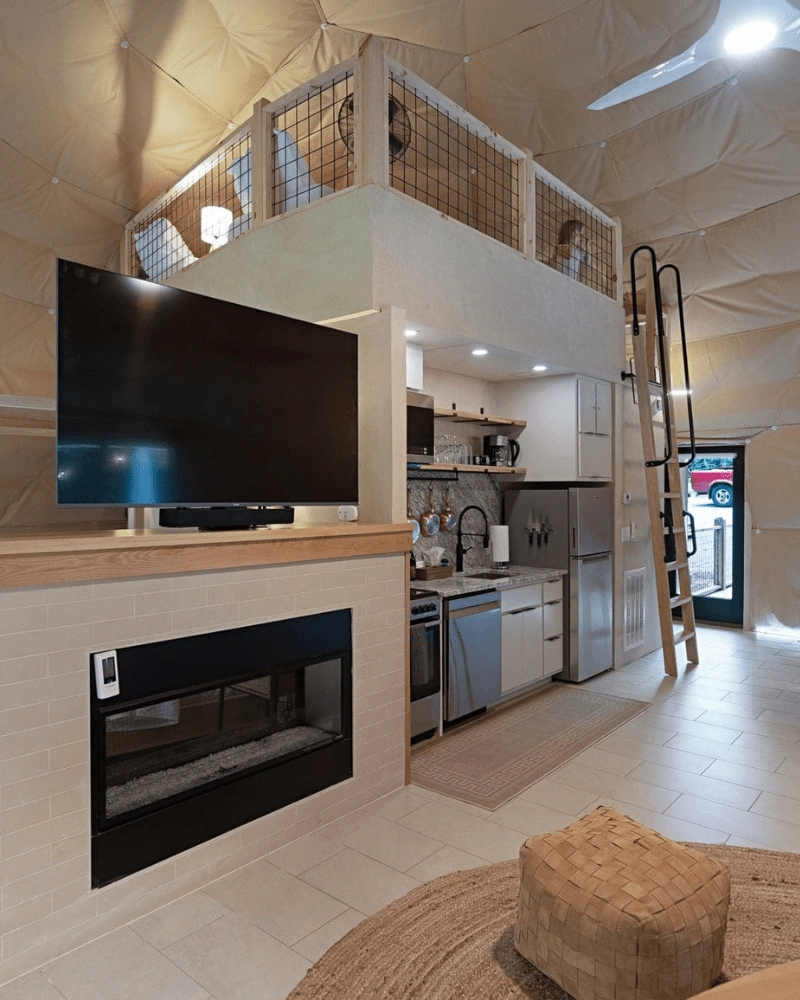
Hotel-Grade Interiors
Modular bathrooms + curated design for true “glamping luxury.”
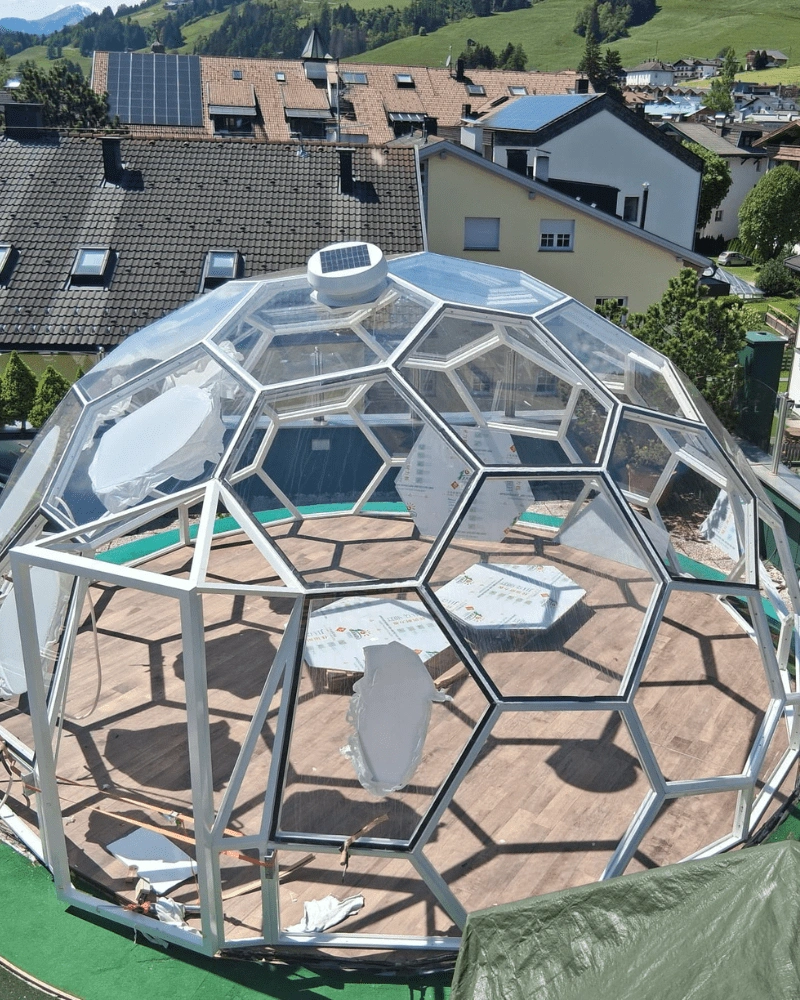
Full-Cycle Support
From planning to after-sales, we’ve got your back.
Clear Positioning
Strong branding that appeals to premium guests.
Total Cost of Ownership: Turnkey vs. Piecemeal Purchases
Fragmented sourcing: Lower upfront price, but higher lifecycle costs—repairs, replacements, energy waste, guest dissatisfaction.
Turnkey solution: Transparent initial investment, faster installation, reduced risks, premium pricing, earlier opening, and healthier cash flow.
With turnkey, you don’t pay more—you own less risk and achieve a lower total cost of ownership (TCO).
Smarter Investment Begins With Cost Insight
A great dome project is more than a striking structure—it’s about delivering lasting guest experiences and consistent profitability.
Choosing a turnkey dome structure package ensures financial clarity, operational stability, and long-term success. You’re saving not just money, but also time, energy, and peace of mind.
Ready to Build Your Dream Dome Camp?
Share the Post:
Related Posts
The Secret to Year-Round Glamping: All-Season Dome Tent
29 November 2024